
Swedish forests are being clear-cut at such a rate that alarms bells are ringing about dramatic loss of biodiversity and old-growth forest. Once clear cut, it is unlikely that biodiversity and old-growth forest will return. Activists are calling for the preservation of the last remaining patches of bio-diverse forest. This must happen. However, we need to look at the demand side. What is driving this demand and are there demand-strategies available?
A recent study from Norway details how clear-cut forests will unlikely ever return to their original bio-diverse state. Of the Swedish forests designated for timber production, estimates state that some 20% have never been clear-cut. These are the areas that have some biodiversity left and are in danger of being cut.
Current rates of extraction highest in 70 years
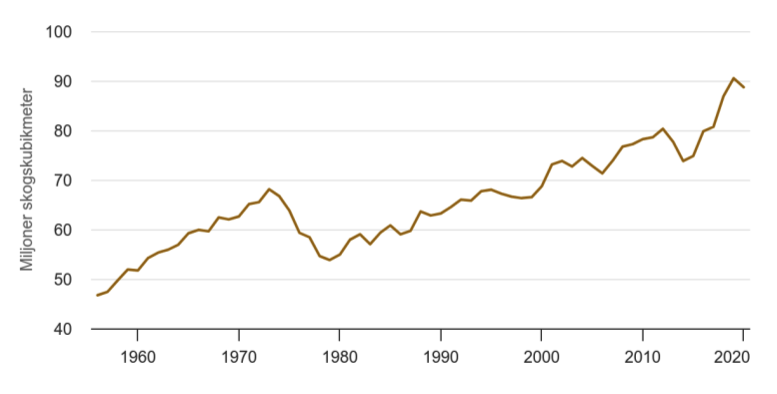
As the diagram above shows, extraction rates continue to rise. This puts pressure on the few remaining percentage of non clear -felled forest and indeed old growth forest. Preservation and demand reduction must go hand in hand to avoid a collapse of biodiversity, including regional extinction of some of the species at risk.
Demand comes not just from house-builders

Bio-energy
As the diagram shows, demand for forest products for combustion is high, some 14.6% of total use. Swedish industry is a massive user of wood for burning, having replaced other, non-renewable sources. The diagram below, from the Swedish EPA , shows how bio-energy (light blue circles) has increased to take over as the main energy source. replacing bio energy has reduced dependence on petroleum products (brown squares).

Paper and cardboard dominate
Paper and cardboard make up nearly 60% of demand. This is despite the Swedish paper industry being highly effective at recycling and re-using paper. The increase in online sales that took off during the pandemic has increased the demand for transport packaging.
Three Strategies
The table below shows three possible strategies to reduce pressure on Swedish forests. A plus sign means that the strategy will reduce demand. A minus signs means increase in demand.

A back of the envelope calculation
Firstly, move to long-lasting products. Should products last twice as long on average, energy for production will reduce by 50%. Secondly, should all buildings be insulated to passivhaus standard, that would reduce demand for bio-energy for heating. Long-life products also includes using existing buildings instead of demolishing old ones to build new. Less production means less transport and needs for packaging. Together it might be possible to reduce demand by 90%. Insulating buildings will take more wood products, so demand might rise by 10%.
Changing the materials in packaging , for example making them from straw or hemp will reduce demand for cardboard. Paper can also be produced from other, less biodiversity-destructive sources, such as straw and hemp. It will require changes in law, but transport packaging could be re-usable.
Together the strategies may reduce demand by 40%. This would be in line with the Swedish strategy of transformation to the circular economy. In any case, by now it should be clear that increasing material use, overall and per person, from the unsustainable levels we have today, will be detrimental to people and nature in the long-run.
 Stephen Hinton Consulting