
In the context of scientists communicating with policymakers, normatives are statements or guidelines that express how things should be, based on values or standards. They are used to frame recommended actions or standards by considering established values and desired outcomes. Essentially, normatives translate scientific findings into actionable recommendations aligned with societal values.
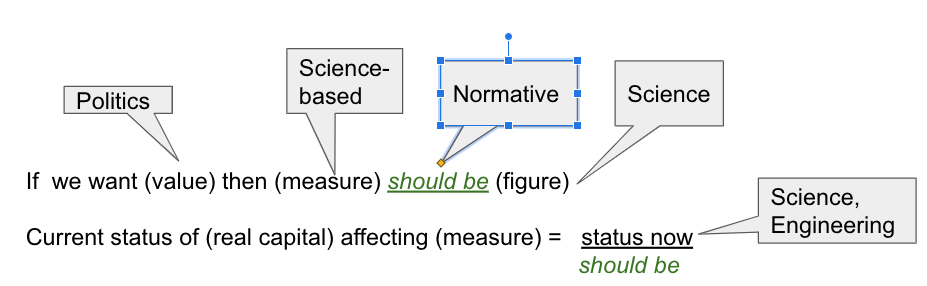
The above picture shows how to go from value to normative to a normative presentation of status.
Here’s a breakdown of what normatives entail:
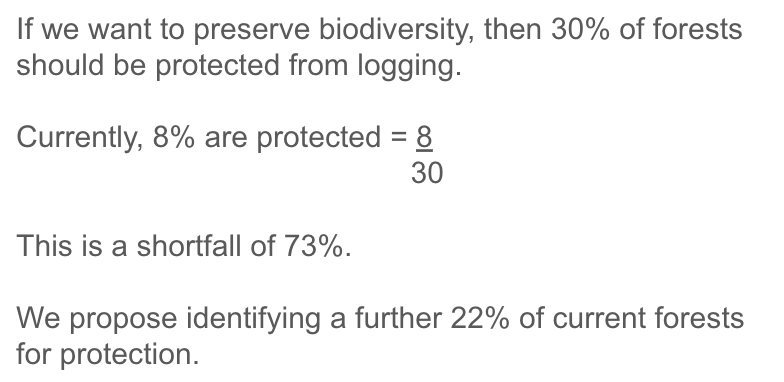
- Value-driven statements: Normatives are more than just data; they are value-driven statements with a goal. They communicate clear recommendations backed by data and aligned with societal values. For example, a normative might state, “If we want to maintain biodiversity, 30% of forests should be protected”.
- Action-oriented: They offer structured recommendations that integrate societal values, providing policymakers with clear, value-oriented actions that can directly inform decision-making. Normatives frame findings in a way that says, “If you care about X, then you should do Y,” making the information specific and measurable.
- Conditional statements: Effective normatives often take the form of “if-then” statements. This structure clarifies the link between desired outcomes and necessary actions, making scientific insights more practical for policy applications. For instance, “If we want to avoid a water shortage, then groundwater extraction should not exceed natural replenishment rates”.
- Measurable standards: Normatives specify conditions under which certain outcomes are desirable and use specific, measurable targets. For example, “If we value resilience to climate change, urban areas should retain at least 20% green spaces for cooling and flood prevention”.
- Real capital valuation: Normatives consider “real capital,” such as natural, human, built, or social resources, to help policymakers assess the maturity and sufficiency of resources without relying solely on financial metrics. This is important because it helps to include non-monetary values in policy considerations.
- Highlighting gaps: Normatives help identify the gap between the current status (“IS”) and the desired state (“SHOULD”), giving an indication of the investment needed to reach the normative goal. For example, if the goal is 30% forest protection and the current level is 8%, there is a gap, or shortfall of 73% against goal.
Normatives are useful because they address several key issues in science communication with policymakers:
- Policy-friendly: They simplify scientific findings into goals that policymakers can easily work with, rather than presenting complex data.
- Accountability: Normatives make clear who needs to take action and why, which promotes more focused discussions and policies.

- Long-term thinking: They help establish targets that reflect long-term needs, such as sustainable development, which is essential for addressing issues like climate change and biodiversity loss.
- Bridging economic gaps: They provide a way to advocate for non-monetary values like environmental health and social equity, which are often overlooked by traditional economic models that focus primarily on financial metrics.
By integrating normatives into their work, scientists can ensure that their research actively informs policy and contributes to shaping a more sustainable and resilient future.
 Stephen Hinton Consulting
One thought on “What are normative statements?”