Three overwhelming global disasters are facing us – climate change, the Coronavirus pandemic, and unknown, transformative socio- economic changes in the Coronavirus aftermath. Some of these socio-economic changes, like the reduction in air travel, if sustained, will have positive effects in support of climate change mitigation and adaptation.
Continue reading “Covid-19: the disconnects exposed and good things to keep”Author: stephenhinton
The circular homestead
Most of the energy used in a Swedish home is for heating: 50% heating the house and 25% for warm water. Electricity need not be generated for this task.
Maybe if we start from the idea of the green, circular, sustainable home we can create a new vision for the future?
I hope the diagram stimulates your thoughts! If you’d like the Swedish version it’s here.
Here are the main elements of a circular house:
- Insulation: Keeps house cool in summer and warm in winter reducing heating costs, which are 50% (Sweden) of total energy use.
- Energy capture: the circular house collects energy from the sun, wind, earth to make it resilient to power outages and part of a smart national grid.
- Kitchen garden: The loop food>humanure(toilet waste)>compost> kitchen garden>food reduces the burden on municipal waste services, reduces the overshoot on planetary boundary phosphorus and nitrogen and provides resilience against food shortages. It also has better carbon capture than a lawn. Any kitchen garden is better than none, so get started today!
- Compost: see (3) Kitchen Garden. Composting recycles bio-nutrients on the spot.
- Grey water: Capturing grey water and recycling it through the garden helps ensure the essential nutrient cycles of P and N do not go into overshoot.
- Nutrient capture: The toilet is the place to collect phosphorous and nitrogen. There are various systems that will recycle these nutrients back into the garden, or even to local farmers.
- Root cellar: a place to store food that requires no energy at all. Resilient if there is an energy shortage. And you’ll need a place to put all that food you grow in the kitchen garden!
- Greenhouse: good to have to prolong the seasons, and grow food not possible otherwise in the climate.
- Rainwater capture: rainwater needs no cleaning to be used for watering the garden, washing clothes, showering etc. Recycle water directly!
- Long-life products: The longer an object lives, the less material burden on the earth. Repairing and upgrading is a great way to ensure once material is extracted, it stays useful as long as possible.
- Neighbours. No circular house is complete without being in a circular neighbourhood. Sharing instead of buying is a great way to reduce material in use.
CRAG – the continuity agency idea – and Joel Makower’s case for a climate & Covid response
Writing on Greenbiz.com Joel Makower makes a strong case for including measures to prevent climate destabilisation in the current response to Corona. Specifically, the bailouts being requested by the airlines, the fossil fuel industry and industrial agriculture should be a chance to put the economy on the right footing.
Continue reading “CRAG – the continuity agency idea – and Joel Makower’s case for a climate & Covid response”… we need to be talking unapologetically about climate, the clean economy, renewable energy, resilient food systems, sustainable mobility, the circular economy and the Sustainable Development Goals with more vigor than ever.
Joel Makower
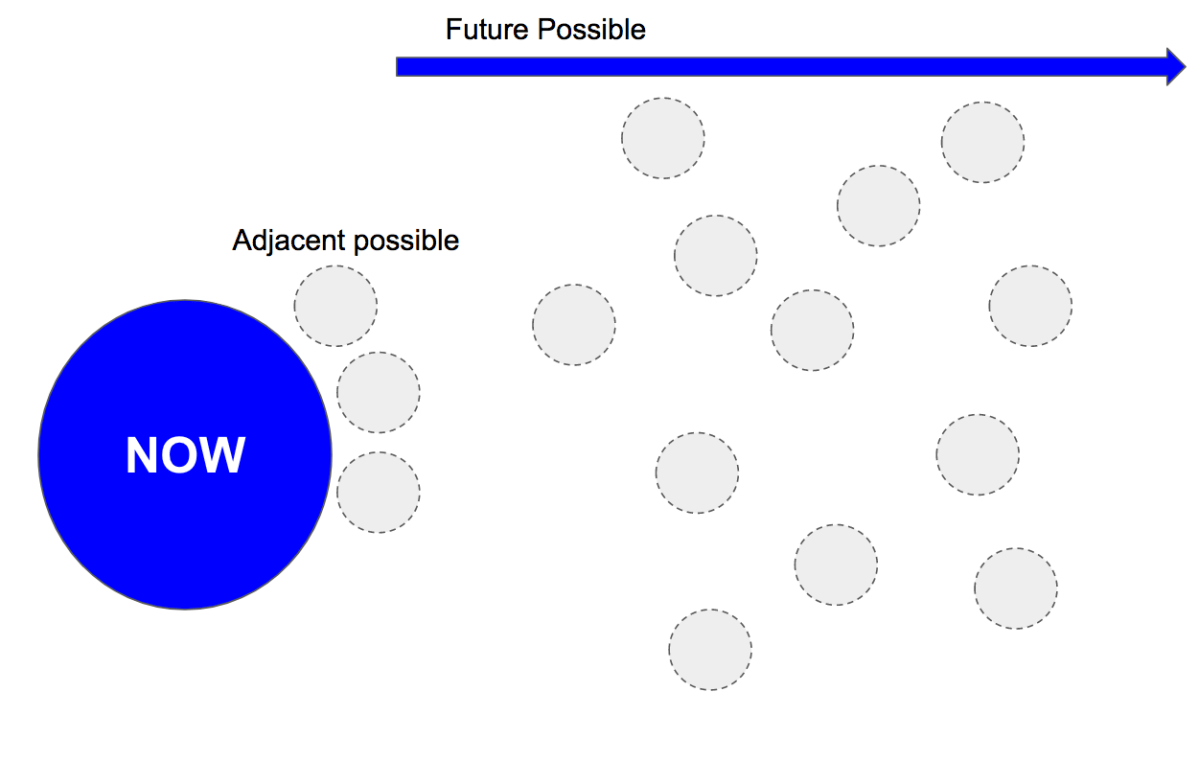
A proposal for the resilient economy in the adjacent possible
The Corona virus pandemic begs us to explore next steps to create a more resilent economic system.
Lessons about the economy, once hard to take in during a time of stability, suddenly become glaringly obvious as countries around the world struggle to respond to the Corona virus pandemic.
Continue reading “A proposal for the resilient economy in the adjacent possible”No time to waste: we are facing a systemic crisis
The rapid infection wave sweeping across the globe is a stark reminder of that which I suppose most of us, or at least readers of this blog, have realised: our current system lacks resilience and is performing badly to expections.
Now is not the time to get into theoretical discussions and fight about socialism verses capitalism. The situation has gone too far. We need to save what we can.
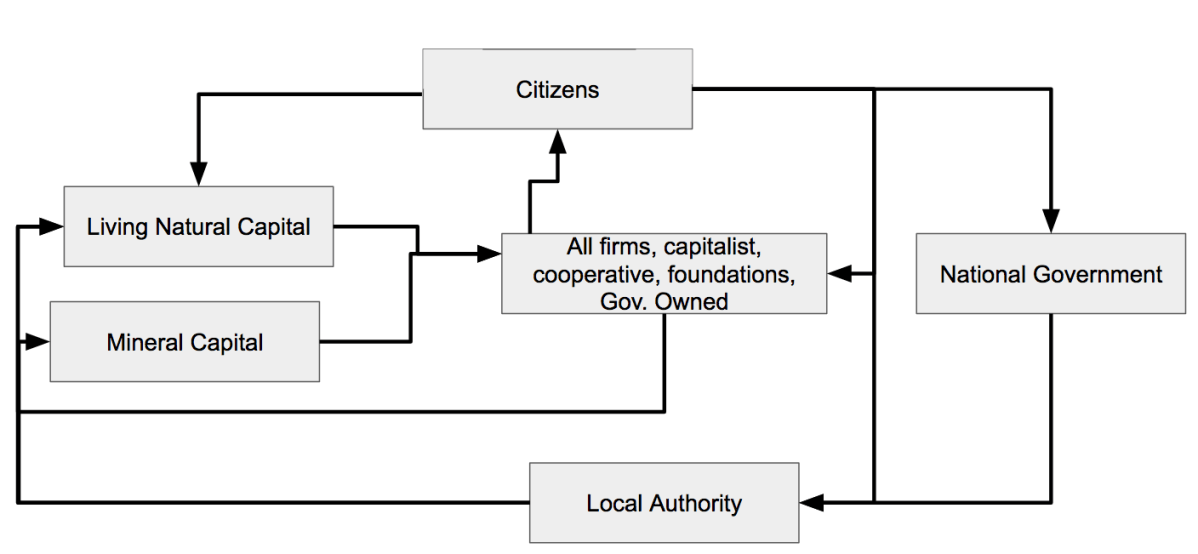
A team at the Swedish think-tank TSSEF.se is working on a proposal to add some functions to a national economy to at least give it a minimum level of resilience.
The idea is based on the concept of control engineering: a mechanical system that is not performing to expectations can be improved by adding smart components and an additional layer of digital control: feedback sensors connected to a computer connected to actuators that control the system.
Readers of this blog are invited to read and comment the first unofficial version by downloading it here.
Or use the comments form on the contact pages for your feedback.
Video Lessons: Sustainability Models and systemic analysis tools
These video lessons take you through a systemic approach to sustainability using as an example the challenge of nitrogen cycle destabilisation and the systems analysis tool KUMU. You should be able to carry out your own analyses after this.
Continue reading “Video Lessons: Sustainability Models and systemic analysis tools”Corona virus gives us a chance to introduce basic income/service guarantee and more
Gail Tveberg’s latest article on the Corona Virus Convid19 lays out its likely effects on not just health but on our way of life. We are likely to see the complete failure of health services, the economy, our just-in-time production systems, welfare, education and food production.
The globalised economy, relying on specialization, optimization, financialization and all the other wonders of the 20 th century are actually ways of creating scarcity and vulnerability not to mention imbalances in equality. This understanding emerged over twelve years ago as thinkers like Gail started to consider the possibility that oil production would peak and this energy-dependent way of life would be unable to adapt to lower energy inputs.
We do not need to be pessimistic however. This is a great chance to put right what was wrong with the extractive industry approach of the 20th century and create something better. We created the problem and so we can fix it.
We need to call an emergency and start to work our way out of it. Not only do we need to limit travel and put people in quarantine as necessary but we also need to re-engineer the economy to take care of people’s real needs first.
There are many ideas out there how to do this. Basic Income/Services is one. If we do not respond, however, the risk is multiple failures including bread-basket failure.
Q&A Regenerative Economics
The recent article on Regenerative Economics got a lot of reads (for this blog at least). It raised a lot of interesting questions, some of which I will address below. First, I need to re-iterate a few things. The first is the big take-away I was aiming for:
- for the capability of a nation to provide basic needs to everyone, a measure of the state of real capital and the performance of the aggregate of the organisations employing that capital are essential for informing policy.
- not all economy can come under this measurement. Definitely not the art market.
- the essence of the regenerative economy is to put in place measures, track and respond to the state of the Real Capital that is employed to provide the security of the basics.
- the focus must always be on stewarding and regenerating the capital needed to provide basic services.
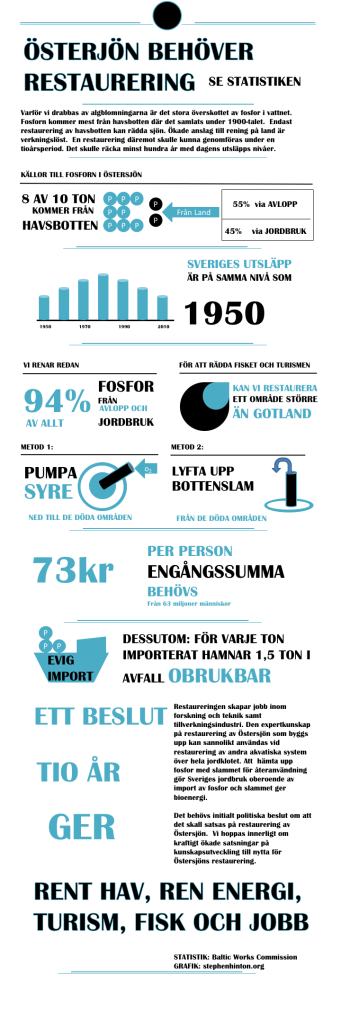
The Baltic needs saving (partly in Swedish)
The Baltic-one of the most polluted waters on Earth is in fact a treasure trove of easy-to -retrieve minerals, metals and composting material. If you remove the sediment that contains the legacy of hundreds of years of latrine and chemical farming you restore the waters and get pristine raw materials.
The restauration of the Baltic would be a gigantic win for the circular economy. It might require a shift. Either we pay little for our food and sewage and a lot (via taxes) for restoration or we pay more for food and sewage and much less to restore our nature.
See my earlier article. And this one. And the presentation.

Genius move by Swedish authorities: sleeper train to Cologne

Great to see how the Swedish Trafikverket are thinking. In an earlier post I pointed out the problems with coming by rail from Sweden to the UK or even other parts of Europe: that you need to either overnight in Hamburg in a hotel or train-jump through the night in Germany to get to Paris/Brussels and then on by Eurostar. Either way it takes a long time. Or you get a night with little sleep.
Soon no more.
Continue reading “Genius move by Swedish authorities: sleeper train to Cologne”