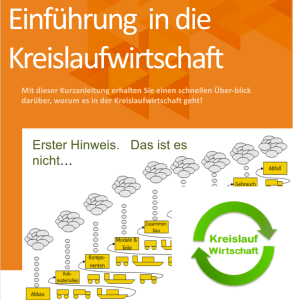
We are pleased to anounce the German arm of our Circular Economy Training is getting up to speed with the release of the German version of our FREE downloadable booklet.
If you prefer talking about the circular economy in German, this is for you. Get yours here!
We had a great event last week, with researchers, investors, impact investors, SDG activists, a bank and a wide range of other stakeholder types represented. The aim was to share the journey that we at Re Equity Partners have taken over the last four years from the idea to create a fund to invest in regeneration and peace to the investment framework we have today.
Reposted from the site for teachers maths4sustainability. This particular problem might be of interest to regular readers – it presents the idea of energy slaves which is one of the biggest challenges facing circular economy.
Simply put, the circular economy is one where biological materials are harvested and returned in a way that preserves, indeed regenerates, eco systems. Materials taken from below the earth, like minerals, stay in circulation. However, the notion could contain more. With eco systems preserved and with a high availability of minerals peoples’ basic needs could be met and a new era ushered in where there is enough for everyone. The circular economy – if introduced right – could help bring peace.
Consider the following:
From a starting point where we recognise people need peace, the circular economy can be set up to provide a basis for a world with a culture of peace.
By making resources abundant and available to all, the ability to make a decent living within natural limits comes into everyone’s grasp.
A culture of peace is even a culture of peace with each other. By eliminating the need to struggle all day every day just to meet basic needs gives people more time for personal growth, to find peace with themselves.
Much of the conflicts in society are eliminated when peoples’ basic needs are met.
Nothing stops a bullet like a job.
Father Greg Boyle
By harvesting biological material responsibly, and keeping minerals in circulation the circular economy reduces the burden on the Earth and indeed lays the ground for the ability for future generations to be able to fulfil their needs.
The Circular Economy provides the opportunity for everyone who needs a job to have one. Once gone, the fossil energy we use to extract, move and dispose of stuff will need to be replaced by the work of many hands.
The Circular economy is one which provides basic security in harmony with the Earth. Security of the basics – including the opportunity to find meaningful work – is a good start towards peace.
The Circular Economy provides the opportunity for everyone who needs a job to have one. It ensures that resources are abundant for needs and eliminates the need for people to struggle against each other to make ends meet. People get time and space to find peace in themselves, and live in a way that is in peace with the Earth, eliminating one of the major causes of conflicts between people.
From the introductory booklet available from the Academy of Invest in Peace
Stockholm 3rd October 18:00 – 21:00. Fund Managers RE Equity and partners are launching a series of dialogue evenings around how to fund the ambitions of the SDG and beyond.
The evening ties in with the recent video from Greta Thunberg and George Monbiot urging us all to concentrate on Preserving Nature, Restoring its carbon sequestration functionality (among other things) and Funding regenerative society.
I believe we need to start to envision what a circular, low-impact, bio-based society will look like in order to usher in the fossil free era.
Indeed the Swedish Government have already declared in January 2019 that they aim for Sweden to be circular and bio-based and resource effective.
I guess we need the circular vision at four levels:
The circular house
The circular neighborhood
The circular municipality
The circular country
The circular nation
Below is a first sketch of what a circular house might look like:
Close to the necessary services (Cycling – ebike – distance?)
Part of a circular neighbourhood
Captures energy, water
Is energy effective
Recycles nutrients
Is part of food provision, too
Lots of reparable items
Or compostable items
If we have the circular house then we need local businesses that serve houses and apartments a n d supply all that is needed for the transition. This could be huge business.
Think of all the new businesses the circular house needs!
Starting this week the Initiative Investors in Peace, founded by the Swedish Sustainable Economy Foundation and several other institutions, is launching its online Academy of Peace. The first courses centre on circular economy as a way to approach peace with the Earth.
For the opening period, all courses are offered free of charge.
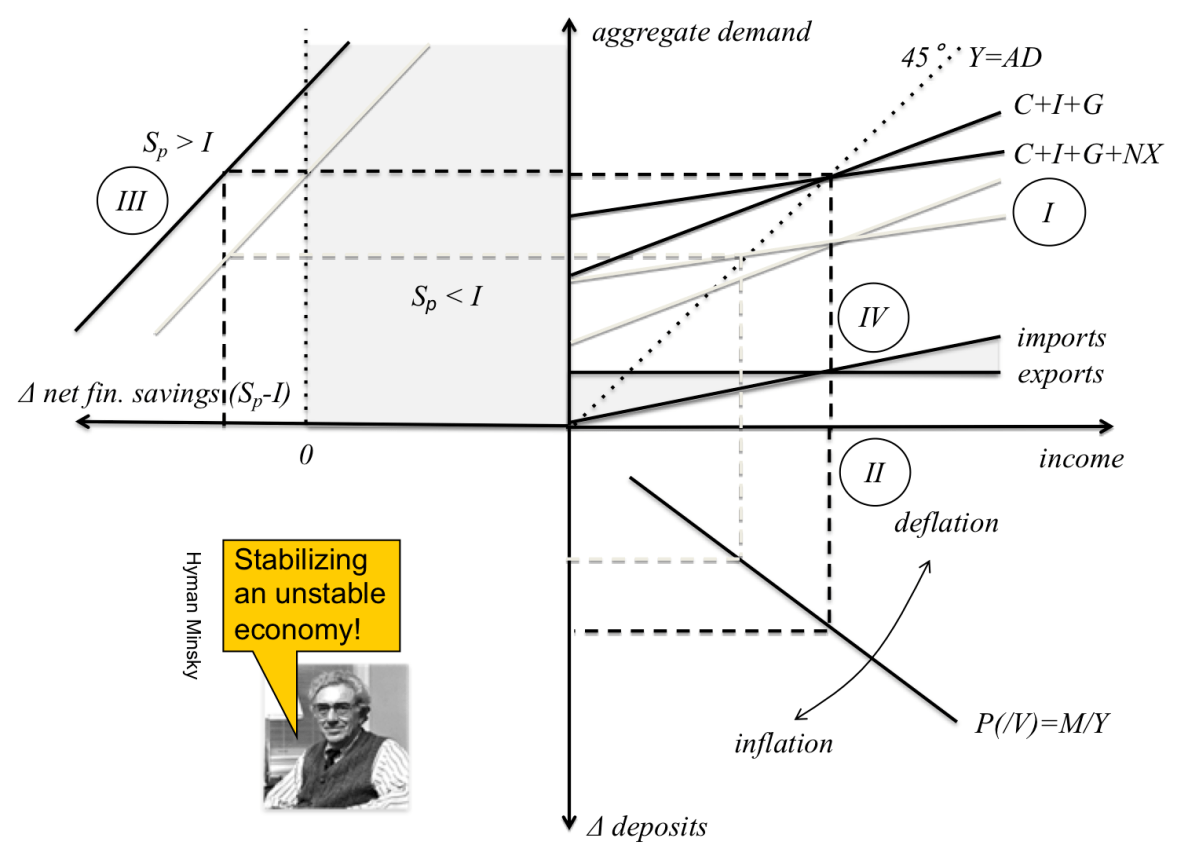
There is a lot of talk about how MMT would lack a “model”. Some commentators on Twitter even claim that MMT would have “no model” and that they just created one themselves. Others believe that stock-flow consistent (SFC) models are basically SFC models. All of that is not quite right!
I think that the only model that can really claim to be a “MMT model” is the one I published in a peer-reviewed journal in 2014. The article in the International Journal of Pluralism and Economics Education (IJPEE) was named “A simple macroeconomic model of a currency union with endogenous money and saving-investment imbalances” (link). With hindsight, it was not a good title, since there is nothing specific about “currency union” or (private!) “saving-investment imbalances” in the model. It is really a replacement of the IS/LM-model and nothing else. The working paper version is accessible freely and was…
Some investment visionaries are rubbing their hands in gleeful anticipation of what AI (artificial intelligence) can do and what they can earn from it. AI has already shown that it can, cheaper and better, do the jobs of warehouse workers, doctors, lawyers and so many other professions. We ask the question what if it could do the job of investing better than capitalists themselves? How would that work? Would capitalism as a way of providing what we need become outdated?
For a long time now, the liberal attitude is that private enterprise, driven by greedy but well-meaning people with money they want to see grow is the best in class problem-solver. Transport? Enter the Henry Fords. Internet services? Enter Googles. Shopping online? Enter Amazons. A sustainable, equitable society? Enter … well we are waiting.
It only takes a short flight of the imagination to see the potential. Already, city developers and other experts are painstakingly developing the workings of something that could change the very logic of investment forever: cities that work for people, owned by people, supported by AI.
City infrastructure – power, transport, waste handling, commerce, water etc., key to creating sustainable cities, cannot be left to individual contractors and private investment to get the city quickly on the path to sustainability. Consultants like Resilience.io are offering infrastructure design applications that optimise infrastructure, use the latest and most sustainable solutions available, and end up often reducing investment needs by as much as 40%.
It is only a short step away to applications like those from Resilience.io can begin writing requests for tenders and indeed legal agreements. In fact, AI could start to propose whole company structures with business plans accompanied by full financial analysis.
So how about planning a city? One not just with an infrastructure that is eco-friendly, circular economy, but one that affords all citizens a decent life? And that includes the city’s vast hinterland. If AI can write songs, stories, design products, prepare legal cases it could well design not only spaces but ownership patterns, investment instruments, jobs, organisations, indeed whole cities.
Now, the wealth created from investment seldom trickles down to the poorer inhabitants. Current capitalist or even social democratic approaches are simply not cutting it.
Suppose, then, that this AI system gets tasked to design optimal sustainable infrastructure along with the optimal ownership pattern of the companies building and running the infrastructure and benefit for residents.
This is new. Under capitalism and social democracy firms produce primarily for profit rather than need. In this proposal, the firms should produce primarily for need. Obviously, one driving force, the possibility to earn money, should be there for private enterprises.
I imagine the AI system might come up with some form of Public Private Partnership. The firms building and operating the infrastructure are 50% owned by private interests, and 50% owned by an investment firm where every city resident is an investor and has equal voting rights.
In this way, not only does the city get great infrastructure, but the better the firm runs, the more dividend goes to residents (and private investors). And citizens get to have a say. One share gives one vote. They might even want to buy more shares if they believe in the company.
As they own part of the infrastructure residents might even be interested in looking after it, reporting faults, handling it with care, etc.
Maybe AI can be the force to help us get past the current impasse of capitalist/socialist – left/right outdated thinking?




 Stephen Hinton Consulting