

Because we can’t depend on Government. They have shown us this. Global government and business leaders gathered recently in Glasgow,Scotland for the UN’s COP26 climate conference. While they made new commitments to help address climate change, it’s clear that we can’t depend on government and business leaders to save the planet; we have to pitch in and do our part. We need a bottom-up climate-action movement.
Author: stephenhinton
Show us the evidence we are in a safe zone
Thought for #COP26. The graph shows CO2 hovering around 275 ppm throughout the time weather patterns allowed agriculture. And 180 – 280ppm all the time humans have been on Earth. What evidence is there we are in a safe zone and can continue?
If there is no evidence that we are safe, surely a mitigation and restabilization plan is needed?

146 clubs use neighbour power to force businesses to be planet friendly
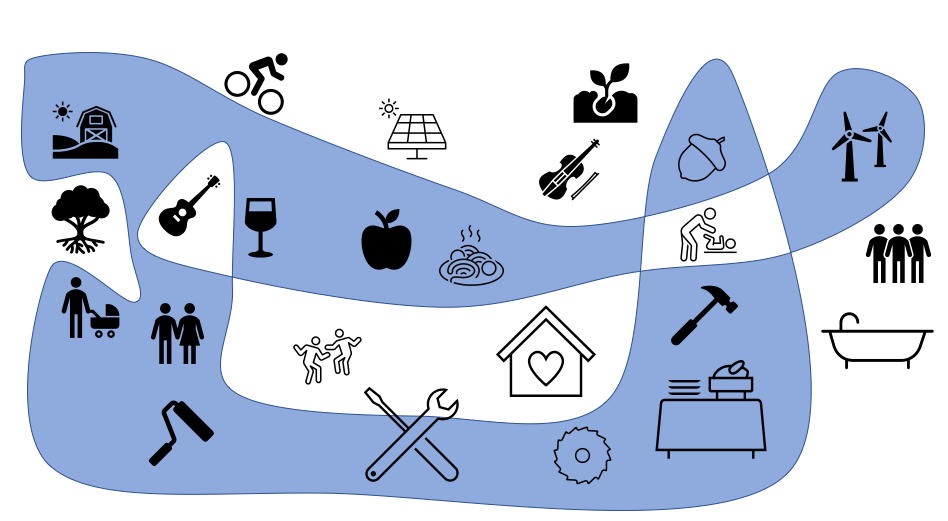
Pivot Projects is a global project set up to bring actionable insights to COP26. Working with some colleagues from Pivot Projects we asked ourselves what the smallest unit could be of individuals working from the bottom up to bring societal functioning inside the doughnut framework.
Continue reading “146 clubs use neighbour power to force businesses to be planet friendly”Concerns inventory: land and water management


- Cloud seeding from forest. Clear felling affects rainfall and cooling
- Poor soil water evaporation due to soil water content loss affects climate
- Air pollution
- Poor soil infiltration.
- Extracted water exceeds replenishment
- Equity in Drinking water
- Polluted Drinking water.
- P and N are not recycled to agriculture, but emitted to surface water or stored on land as waste.
- Waste water plants do not recycle P and N.
- P N emitted from waste-water treatment plant.
- Impaired water with pollutants emitted to surface water
- P,N in runoff from agriculture
- P,N in runoff from forestry and other non-agricultural management practices
- CO2 emissions from water provision
- Challenge to find sufficient water for agriculture, industry and households.
- Water export via agriculture
Regional authorities role in the circular economy
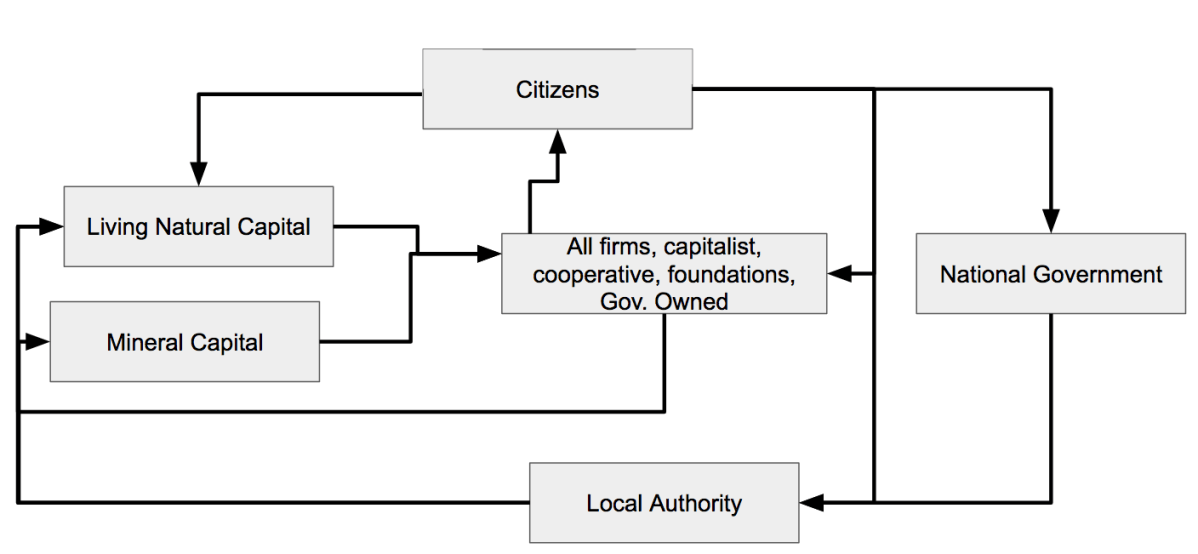
A circular economy is vastly different from a linear economy. When it comes to the resources that drive the economy, a linear economy is extractive whereas the circular economy is regenerative of its material sources. The current linear way we run our economy is using resources up at an ever-expanding rate. Before resource shortages overturn the economy we need to transition to the circular use of materials. But how do we get to the circular model? This article takes a high-level systems analysis approach to explore possible pathways, and hones in on the role of local authorities.
Continue reading “Regional authorities role in the circular economy”Regional policy implications of the circular economy
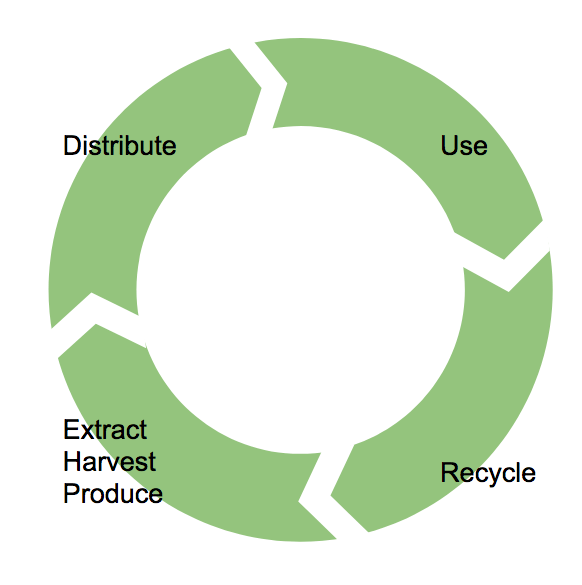
As circular economy thinking takes hold among policy makers, civil servants and scientists, policy is tending towards circular as a strategy to reach environmental objectives. Hopes are that production systems will continue to deliver and indeed grow economically, but with far less material and fossil energy intensity. The Swedish Government formed its own Circular Economy Delegation last year and recently announced its national strategy for the Circular Economy and 100 measures to transition to circularity.
Policy needs to align, but this raises questions. The economy is a complex adaptive system, and any intervention may cause the opposite of the intended effects. This article explores my own very personal reflections based on earlier work together with my recent work with the local university.
Continue reading “Regional policy implications of the circular economy”Not targets but U-turns: reflections on the IPCC report

Released today, the report, which summarises scientists’ understanding of what is happening with climate change, warns that Earth will unavoidably hit the critical threshold of 1.5°C warming due to climate change within the next 20 years. This is a combination of natural processes and human emissions. This is regardless of how radically global governments cut greenhouse gas emissions. This article urgently proposes a new framing approach: a pivot.
Continue reading “Not targets but U-turns: reflections on the IPCC report”Urban symbiosis for the bio-economy

It hasn’t been done as far as I know, but it would be good to plan a city or town along urban symbiosis lines. And to concentrate on bio material, including nutrients, being used and circulating as long as possible in the urban economy.
The diagram above shows the basic pattern:
- Four major functions
- Four major flows
It is called symbiosis because the design calls for the four flows and functions to synergise with each other. For example, nutrients from sewage and household organic waste can be used as soil amendments. Water flowing can generate electricity, waste heat from industries can be used in greenhouses, etc.
See the short video below explaining the concept.
Regional progress towards circular economy in Sweden
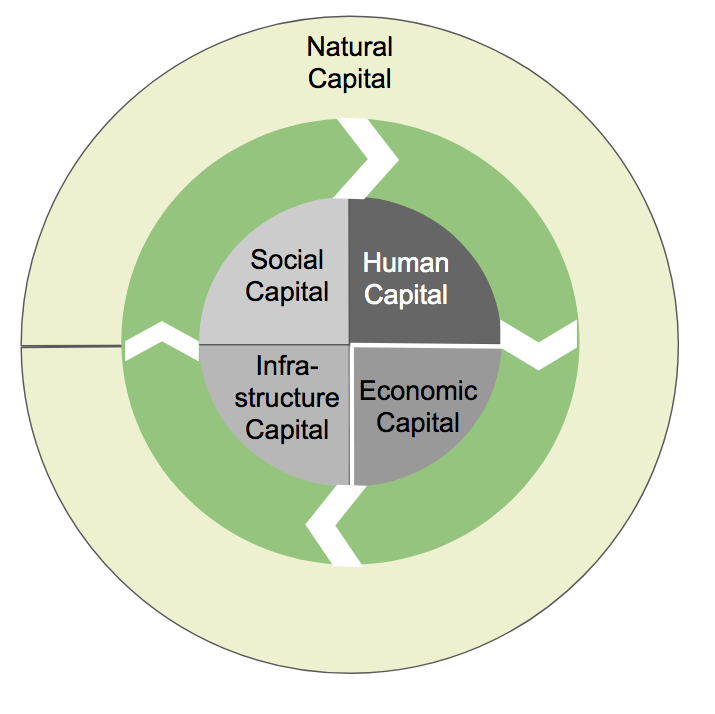
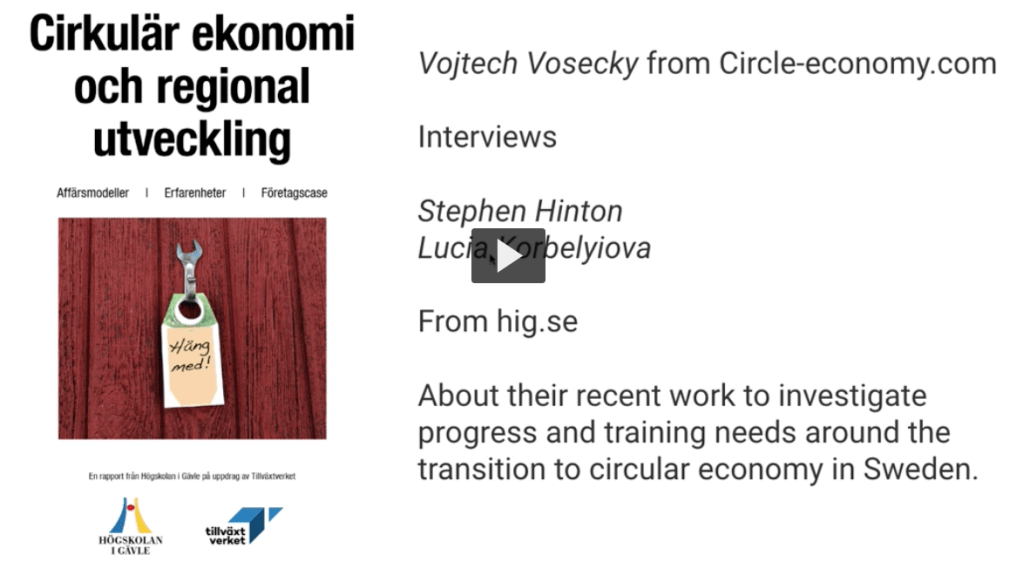
This interview, by Vojtech Vosecky from Circle-economy.com, looks at the results of a recent investigation by the University of Gävle into the status and training needs of regions in Sweden.
Continue reading “Regional progress towards circular economy in Sweden”John Kerry, envoy for the climate, tells it by not telling it
On January the 21 st John Kerry, now the special presidential envoy for climate, presented a new direction for the US climate strategy. All friends of sustainability will be heartened by his comments that the US will move forward with humility and ambition. What he didn’t talk about is perhaps less heartening.
Continue reading “John Kerry, envoy for the climate, tells it by not telling it” Stephen Hinton Consulting