Corona virus gives us a chance to introduce basic income/service guarantee and more

Gail Tveberg’s latest article on the Corona Virus Convid19 lays out its likely effects on not just health but on our way of life. We are likely to see the complete failure of health services, the economy, our just-in-time production systems, welfare, education and food production.

The globalised economy, relying on specialization, optimization, financialization and all the other wonders of the 20 th century are actually ways of creating scarcity and vulnerability not to mention imbalances in equality. This understanding emerged over twelve years ago as thinkers like Gail started to consider the possibility that oil production would peak and this energy-dependent way of life would be unable to adapt to lower energy inputs.

We do not need to be pessimistic however. This is a great chance to put right what was wrong with the extractive industry approach of the 20th century and create something better. We created the problem and so we can fix it.

We need to call an emergency and start to work our way out of it. Not only do we need to limit travel and put people in quarantine as necessary but we also need to re-engineer the economy to take care of people’s real needs first.

There are many ideas out there how to do this. Basic Income/Services is one. If we do not respond, however, the risk is multiple failures including bread-basket failure.

Q&A Regenerative Economics

The recent article on Regenerative Economics got a lot of reads (for this blog at least). It raised a lot of interesting questions, some of which I will address below. First, I need to re-iterate a few things. The first is the big take-away I was aiming for:

  • for the capability of a nation to provide basic needs to everyone, a measure of the state of real capital and the performance of the aggregate of the organisations employing that capital are essential for informing policy.
  • not all economy can come under this measurement. Definitely not the art market.
  • the essence of the regenerative economy is to put in place measures, track and respond to the state of the Real Capital that is employed to provide the security of the basics.
  • the focus must always be on stewarding and regenerating the capital needed to provide basic services.
Continue reading “Q&A Regenerative Economics”

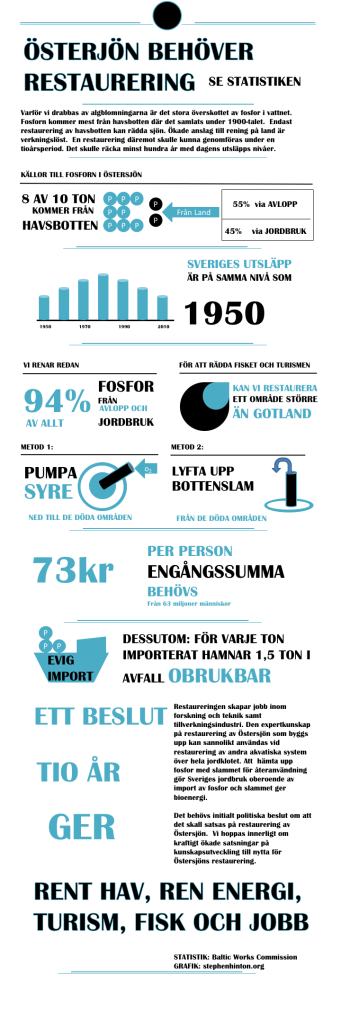
The Baltic needs saving (partly in Swedish)

The Baltic-one of the most polluted waters on Earth is in fact a treasure trove of easy-to -retrieve minerals, metals and composting material. If you remove the sediment that contains the legacy of hundreds of years of latrine and chemical farming you restore the waters and get pristine raw materials.

The restauration of the Baltic would be a gigantic win for the circular economy. It might require a shift. Either we pay little for our food and sewage and a lot (via taxes) for restoration or we pay more for food and sewage and much less to restore our nature.

See my earlier article. And this one. And the presentation.

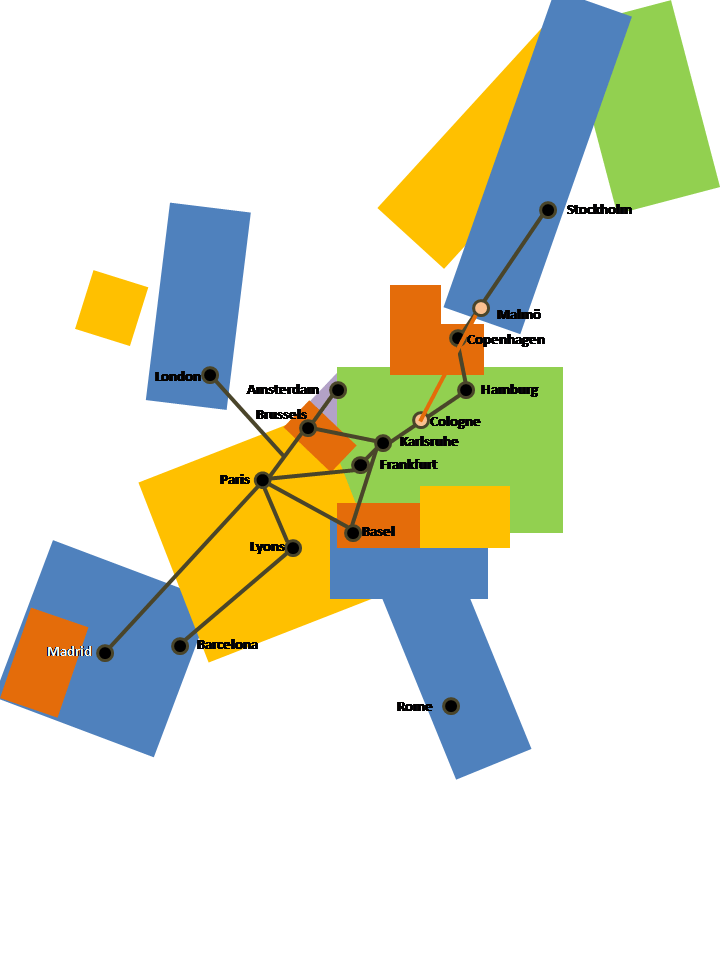
Genius move by Swedish authorities: sleeper train to Cologne

Great to see how the Swedish Trafikverket are thinking. In an earlier post I pointed out the problems with coming by rail from Sweden to the UK or even other parts of Europe: that you need to either overnight in Hamburg in a hotel or train-jump through the night in Germany to get to Paris/Brussels and then on by Eurostar. Either way it takes a long time. Or you get a night with little sleep.

Soon no more.

Continue reading “Genius move by Swedish authorities: sleeper train to Cologne”

This is what a regenerative economy looks like

Imagine. You buy an orange from the store and trigger a whole chain of positive reactions. Staff get paid, public infrastructure gets repaired, rebuilt and improved, the land the oranges grow on gets fertilised and new orange trees get planted. It is not such a stretch of the imagination as you might think, because that is the way nature operates. By feeding, creatures actually steward and improve the eco-system. You could say their feeding, moving through and manuring nature regenerates the capability of the eco-system.

Continue reading “This is what a regenerative economy looks like”

A natural capital approach to the circular economy

This article follows on from the previous one in the series on explainers about capitalism “What exactly about capitalism means it extracts and exploits?“. We are gravitating towards offering a solution but we need to take a deeper look at what we mean by capital.

Continue reading “A natural capital approach to the circular economy”

Universal Basic Income Game in beta release!

UBI means Universal Basic Income and guarantees people who are not in work a basic income level. About UBI people have a lot of different opinions – some say it frees up people and their entrepreneur spirit – others say it makes people lazy. How are we going to pay for it? is another objection.

We designed and built this downloadable single player/small group version so you could try out ideas around UBI for yourself.

Continue reading “Universal Basic Income Game in beta release!”

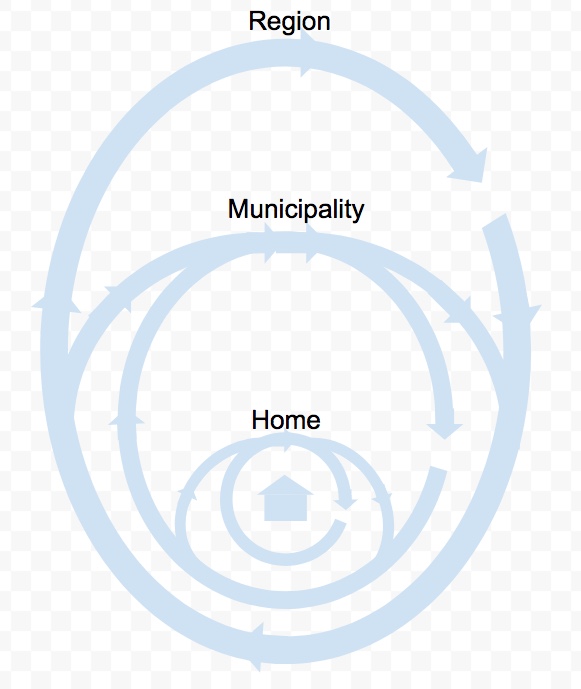
Envisioning the circular region

The transformation to the circular economy demands of us that we start to identify what is appropriate to cycle and recycle at the four different administrative levels: state, regional (or county), municipal, neighborhood and in the circular home.

The diagram above gives an idea of the scale we are discussing.

Several questions arise:

  • Which criteria for what is local and what is regional shall we apply? Minimization of transport work, advantages of centralization, centres of specialist competence and infrastructure?
  • Is there a natural scale difference between the technical and the biological cycles?
  • What major areas shall we include? Food, construction, energy, transport, water, water treatment, etc.?
  • What problem areas are there and what immediate “low handing fruit” can we see?
  • How does the circular economy impact climate adaptation?

Several of these issues will be looked at in depth in the coming project from Gävle University that is preparing material to help Swedish regions frame the circular economy into their regional development strategies. I hope to share insights from that work as they publish their findings.

And can we envisage a circular home? The diagram below might be a start.

If you would like to explore the circular economy deeper, we offer training at the Academy of Investors in Peace, or click on the links to the articles on this site on the circular economy.

New E-Book – addressing the market failures arising from the structure of the firm

We are in a time of transition. The world no longer seems to present vast frontiers of new forests to fell, mineral wealth under our feet to extract, or of new soils to plough. Instead the Earth has become more like a garden which we realise we need to steward carefully to keep it productive.

We also see another transition, from societies where everyone more or less had the basics to massive inequalities where for instance in the UK, one in 200 is homeless.

At least from a European perspective, where the state is seen as the protector of people and resources, and firms are partners in providing what people need, we can see this a massive market failure.

Continue reading “New E-Book – addressing the market failures arising from the structure of the firm”