
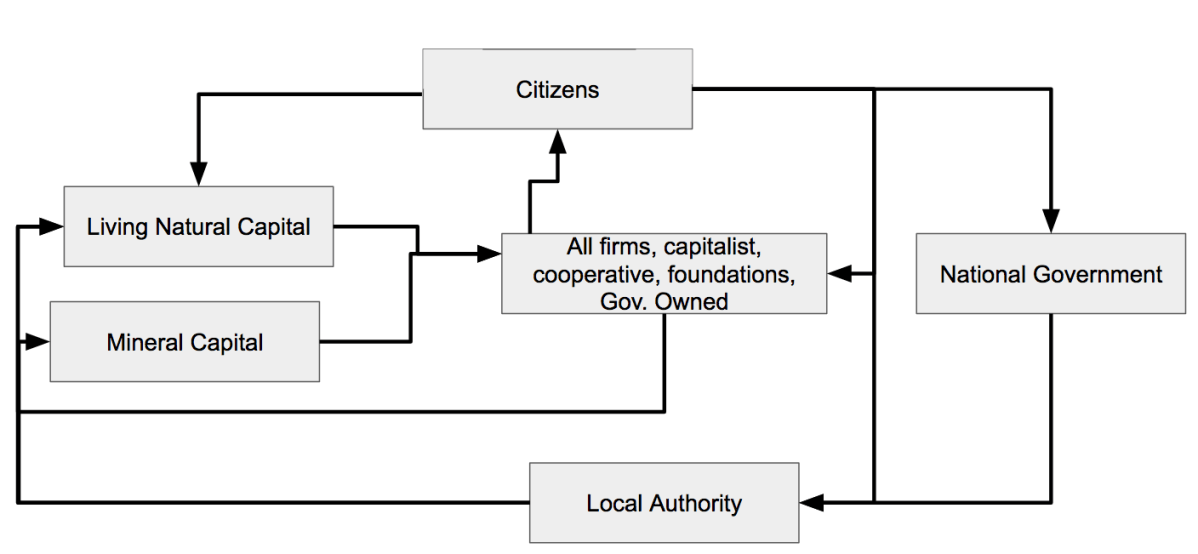
A circular economy is vastly different from a linear economy. When it comes to the resources that drive the economy, a linear economy is extractive whereas the circular economy is regenerative of its material source. The current way we run our economy is using resources up at an ever-expanding rate. Before resource shortages overturn the economy we need to transition to the circular use of materials. But how do we get to the circular model? This article takes a high-level systems analysis approach to explore possible pathways, and hones in on the role of local authorities.
Continue reading “Why regional authorities are the key to a circular economy”Category: Circular Economy
The Continuity Agency – a new government role post Covid
Corona has exposed many weaknesses, including our lack of health care system capability. It has also opened up some possibilities for permanent changes for example as people start to appreciate the reduction in noise, how the air is better, etc.
Covid has shown us that we are all in this together. It is as a whole we can progress, to quote the Sustanable Development Goals , no one left behind. The current system is fundamentally flawed at a basic level because its very construction leaves people behind and obfuscates how people – including the organisations we have created -really are in this all together.
Continue reading “The Continuity Agency – a new government role post Covid”The circular homestead
Most of the energy used in a Swedish home is for heating: 50% heating the house and 25% for warm water. Electricity need not be generated for this task.
Maybe if we start from the idea of the green, circular, sustainable home we can create a new vision for the future?
I hope the diagram stimulates your thoughts! If you’d like the Swedish version it’s here.
Here are the main elements of a circular house:
- Insulation: Keeps house cool in summer and warm in winter reducing heating costs, which are 50% (Sweden) of total energy use.
- Energy capture: the circular house collects energy from the sun, wind, earth to make it resilient to power outages and part of a smart national grid.
- Kitchen garden: The loop food>humanure(toilet waste)>compost> kitchen garden>food reduces the burden on municipal waste services, reduces the overshoot on planetary boundary phosphorus and nitrogen and provides resilience against food shortages. It also has better carbon capture than a lawn. Any kitchen garden is better than none, so get started today!
- Compost: see (3) Kitchen Garden. Composting recycles bio-nutrients on the spot.
- Grey water: Capturing grey water and recycling it through the garden helps ensure the essential nutrient cycles of P and N do not go into overshoot.
- Nutrient capture: The toilet is the place to collect phosphorous and nitrogen. There are various systems that will recycle these nutrients back into the garden, or even to local farmers.
- Root cellar: a place to store food that requires no energy at all. Resilient if there is an energy shortage. And you’ll need a place to put all that food you grow in the kitchen garden!
- Greenhouse: good to have to prolong the seasons, and grow food not possible otherwise in the climate.
- Rainwater capture: rainwater needs no cleaning to be used for watering the garden, washing clothes, showering etc. Recycle water directly!
- Long-life products: The longer an object lives, the less material burden on the earth. Repairing and upgrading is a great way to ensure once material is extracted, it stays useful as long as possible.
- Neighbours. No circular house is complete without being in a circular neighbourhood. Sharing instead of buying is a great way to reduce material in use.
Video Lessons: Sustainability Models and systemic analysis tools
These video lessons take you through a systemic approach to sustainability using as an example the challenge of nitrogen cycle destabilisation and the systems analysis tool KUMU. You should be able to carry out your own analyses after this.
Continue reading “Video Lessons: Sustainability Models and systemic analysis tools”Q&A Regenerative Economics

The recent article on Regenerative Economics got a lot of reads (for this blog at least). It raised a lot of interesting questions, some of which I will address below. First, I need to re-iterate a few things. The first is the big take-away I was aiming for:
- for the capability of a nation to provide basic needs to everyone, a measure of the state of real capital and the performance of the aggregate of the organisations employing that capital are essential for informing policy.
- not all economy can come under this measurement. Definitely not the art market.
- the essence of the regenerative economy is to put in place measures, track and respond to the state of the Real Capital that is employed to provide the security of the basics.
- the focus must always be on stewarding and regenerating the capital needed to provide basic services.
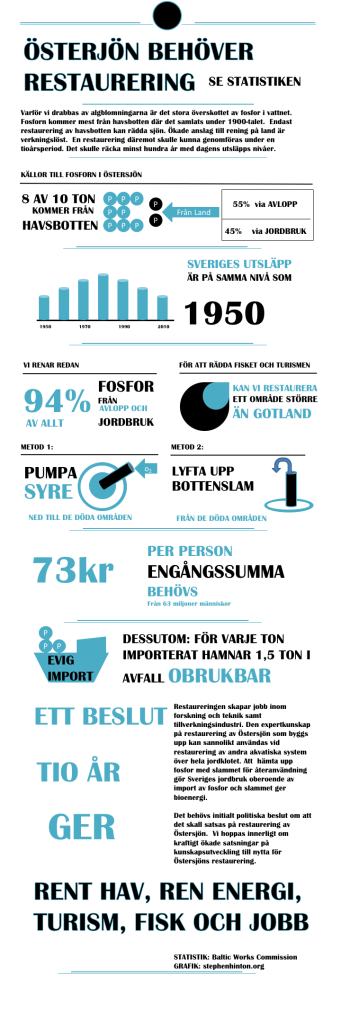
The Baltic needs saving (partly in Swedish)
The Baltic-one of the most polluted waters on Earth is in fact a treasure trove of easy-to -retrieve minerals, metals and composting material. If you remove the sediment that contains the legacy of hundreds of years of latrine and chemical farming you restore the waters and get pristine raw materials.
The restauration of the Baltic would be a gigantic win for the circular economy. It might require a shift. Either we pay little for our food and sewage and a lot (via taxes) for restoration or we pay more for food and sewage and much less to restore our nature.
See my earlier article. And this one. And the presentation.
2019 was a circular year
Let’s take a look back to the year where circular economy took centre stage; involving our consulting service and seeing the launch of the Academy of Investors in Peace and their online circular economy courses.
Continue reading “2019 was a circular year”New E-Book – addressing the market failures arising from the structure of the firm
We are in a time of transition. The world no longer seems to present vast frontiers of new forests to fell, mineral wealth under our feet to extract, or of new soils to plough. Instead the Earth has become more like a garden which we realise we need to steward carefully to keep it productive.
We also see another transition, from societies where everyone more or less had the basics to massive inequalities where for instance in the UK, one in 200 is homeless.
At least from a European perspective, where the state is seen as the protector of people and resources, and firms are partners in providing what people need, we can see this a massive market failure.
Continue reading “New E-Book – addressing the market failures arising from the structure of the firm”New E-Books on the circular economy
This week, the Investors in Peace Academy published two new titles under the category of Peace with the Earth. Each E-book is free to download (you will need to register for updates but you can opt out at any time.)
Continue reading “New E-Books on the circular economy”Selected as one of the top blogs on circular economy

Stephenhinton.org just learned that the aggregator FEEDSPOT has this blog listed as one to the top 20 sites on circular economy. See the full list here.
 Stephen Hinton Consulting