

Sweden, like many countries, is pursuing the circular economy as a path to decarbonization, to the bio-economy and to ensure their economy has enough material resources. Apart from the climate emergency, pressure from population increases and rising standards are about to create inevitable material shortages. Still developing, the idea of circular economy begs us to envision a circular home, a circular neighbourhood and circular municipality. This article explores what a circular economy neighbourhood might look like, and how a cooperative model might help accelerate the transition in Sweden. The ideas may, of course, apply to other countries.
Continue reading “The circular economy neighbourhood”Category: Envisioning Sustainable Futures
The sustainable future-a riveting read?
Whilst we are longing for the sustainable future we are flooded with visions fashioned from concrete and steel, albeit covered with green. In these visions people seem to be doing nothing and going nowhere. Can we conjure forth a vision so attractive, cool and magnetic it just pulls us into that future?
Continue reading “The sustainable future-a riveting read?”Show us the evidence we are in a safe zone
Thought for #COP26. The graph shows CO2 hovering around 275 ppm throughout the time weather patterns allowed agriculture. And 180 – 280ppm all the time humans have been on Earth. What evidence is there we are in a safe zone and can continue?
If there is no evidence that we are safe, surely a mitigation and restabilization plan is needed?

Regional policy implications of the circular economy
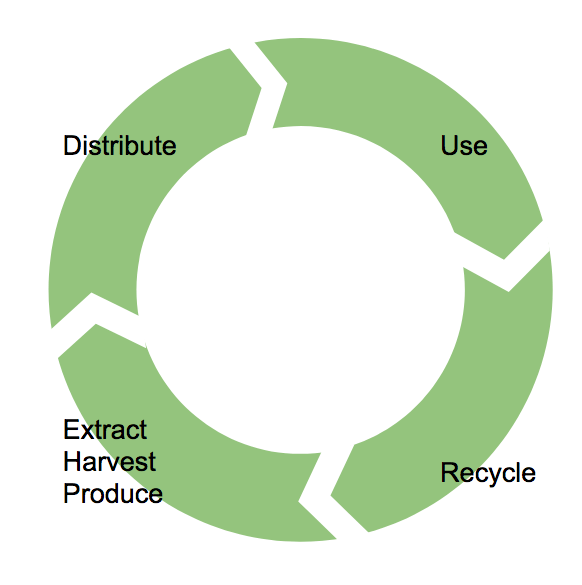
As circular economy thinking takes hold among policy makers, civil servants and scientists, policy is tending towards circular as a strategy to reach environmental objectives. Hopes are that production systems will continue to deliver and indeed grow economically, but with far less material and fossil energy intensity. The Swedish Government formed its own Circular Economy Delegation last year and recently announced its national strategy for the Circular Economy and 100 measures to transition to circularity.
Policy needs to align, but this raises questions. The economy is a complex adaptive system, and any intervention may cause the opposite of the intended effects. This article explores my own very personal reflections based on earlier work together with my recent work with the local university.
Continue reading “Regional policy implications of the circular economy”Not targets but U-turns: reflections on the IPCC report

Released today, the report, which summarises scientists’ understanding of what is happening with climate change, warns that Earth will unavoidably hit the critical threshold of 1.5°C warming due to climate change within the next 20 years. This is a combination of natural processes and human emissions. This is regardless of how radically global governments cut greenhouse gas emissions. This article urgently proposes a new framing approach: a pivot.
Continue reading “Not targets but U-turns: reflections on the IPCC report”John Kerry, envoy for the climate, tells it by not telling it
On January the 21 st John Kerry, now the special presidential envoy for climate, presented a new direction for the US climate strategy. All friends of sustainability will be heartened by his comments that the US will move forward with humility and ambition. What he didn’t talk about is perhaps less heartening.
Continue reading “John Kerry, envoy for the climate, tells it by not telling it”Johan Rockströms performance lecture: a review
THREAD FROM TWITTER: Johan Rockström’s Performance lecture at the Swedish National Theatre (in Swedish, English Subtitles) and what it tells activists and Scientists alike. Watch it now or read my review 1/n

The time to pivot is now
My interpretation of what a pivot is: a cap on resource withdrawal followed by a rapid reduction. A pivot can happen before or after the breach of capacity. When the pivot happens greatly affects how much resources will be needed to rectify the situation, as well as the costs of the negative impacts of overshoot. This article lays out the basic concepts of pivot.
Anyone growing up when times just get worse will expect that they will continue to get worse. Growing up in a time when things just get better you will expect them to continue to get better. The worst are when things have been getting better but you know they are going to get a lot worse. That is where we are. It’s uncomfortable to say the least.
We are waking up the realisation that progress since the 1950s has actually been at the expense of earth systems and natural resources. The carrying capacity of earth systems has been eroded to such an extent, and populations and their material uses have grown to such a magnitude, we now find ourselves in overshoot.
Continue reading “The time to pivot is now”Indigenous leaders’ message about regenerative agriculture. We should listen
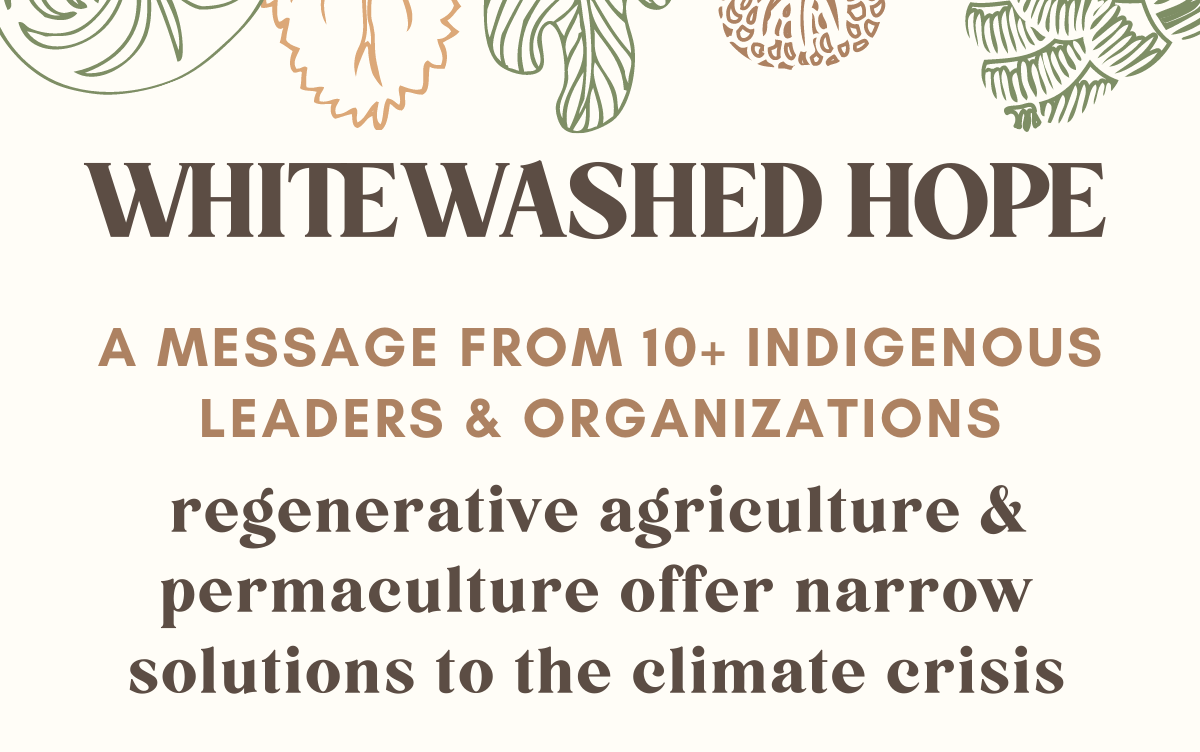
Regenerative Agriculture and Permaculture Offer Narrow Solutions to the Climate Crisis
Regenerative agriculture (Regen Ag) and permaculture claim to be the solutions to our ecological crises. While they both borrow practices from Indigenous cultures, critically, they leave out our worldviews and continue the pattern of erasing our history and contributions to the modern world.
While the practices ‘sustainable farming’ promote are important, they do not encompass the deep cultural and relational changes needed to realize our collective healing.
Continue reading “Indigenous leaders’ message about regenerative agriculture. We should listen”Circular city logistics

This article comes from the book “Inventing for the Sustainable Planet” a novel which asks the question “if you were to visit a city that was sustainable- what would it look like?” The novel about the city of Porena contains several far-reaching ideas including the idea of global design with local assembly. In this section the book’s hero, Max Wahlter, describes how circular manufacturing needs circular local city logistics to be sustainable.
Continue reading “Circular city logistics” Stephen Hinton Consulting