
Earlier posts explained that the Swedish system of classifying organisations according to the products they produce (SNI) is useful as a tool to study the workings of the supply chains. The classification is connected to a lot of data collected about Swedish companies. This section covers the concept of allocation – that is about how much of common pool resources each type of industry takes up, and how much of the total need is filled by the respective companies. We will explore the theory in this part. The aim is to develop approaches that better inform policy making.
Continue reading “The ABC of supply chains. Allocation of common pool assets and services based on them.”Category: Multi-Capital
The “C” of the ABC of supply chains is the keystone of circularity
The last article explained that, if you are looking to develop policy to drive the circular economy, then it is useful to divide supply chains up in their industrial classification. You need to look at one in particular, the keystone holding it all up – C, manufacturing. And in manufacturing, you need to focus on built capital – the capability and performance of the actual infrastructure used in manufacturing.
Continue reading “The “C” of the ABC of supply chains is the keystone of circularity”The ABC of Supply Chains shows the disconnects killing the planet
Fortunately for us, Sweden keeps a pretty comprehensive set of statistics 1 on how its industry performs. It takes a while to retrieve them and put them together at the highest levels, but the exercise reveals som particular insights about how the developed world works. You could say that supply chains represent the workings of the global super organism. When you look at the system from above, you see some glaring disconnects. It gives a good idea of who is doing what to the planet, and who is earning the money from it. They are definitely different industries, if not different people.
Continue reading “The ABC of Supply Chains shows the disconnects killing the planet”A carbon dioxide balance sheet for Sweden
Based on official statistics it is possible to put together a high-level balance sheet for Sweden’s carbon dioxide emissions and uptake. It does raise some interesting questions as to how the statistics are set up, but let us look at the overall picture – to better understand how the country can fulfil its ambition to be climate neutral by 2050.
Continue reading “A carbon dioxide balance sheet for Sweden”Real Capital – an explainer
Explainer: what is real capital. Real capital refers to resources used in producing goods and services without being entirely consumed. It encompasses natural, built, social, and human capital. Mature real capital has the capability to provide necessary services to the intended population. Evaluating the maturity level of capital can guide policy decisions and determine the interplay of different capital types, investment needs, and development goals.

Real capital defined
Real capital is defined as:
Something that is used in the production of
goods and services to society, but not used up.
Note that capital is necessary but not sufficient to provide services. The capital is utilised in the production system. There are several categorisation methods, but I prefer the following as described in the table below:
Continue reading “Real Capital – an explainer”UK water industry is environmentally insolvent
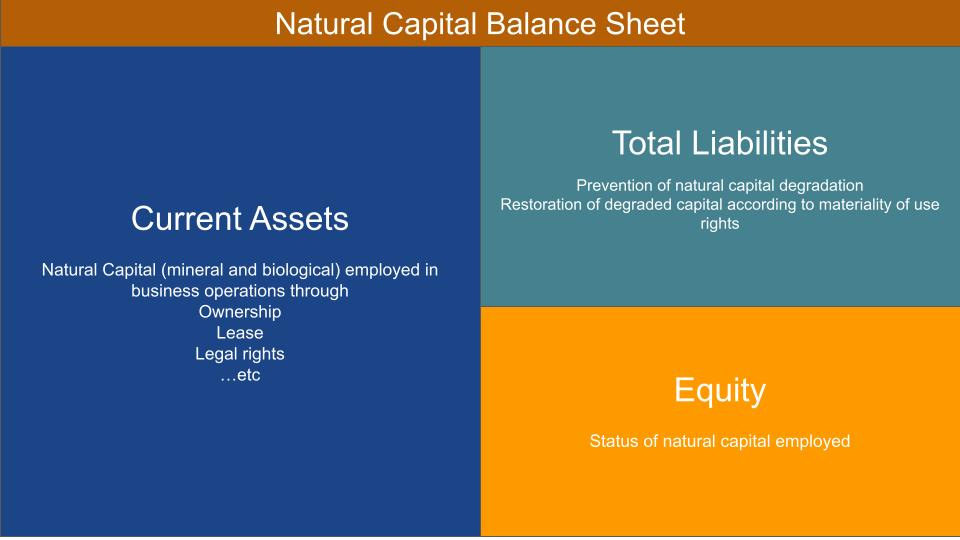
This is something for investors in peace with the Earth: the concept of environmental insolvency. It happens when a business creates an environmental liability (in this case, when water cleaning activities pour sewage into rivers and coasts requiring massive reparations). This liability comes when the operational contract requires restitution and the firms do not have enough assets to fund the restoration and upgrade.
Continue reading “UK water industry is environmentally insolvent”Video tutorial: system dynamics and economics of the circular economy

The decision basis most policy makers have to go on are overwhelmingly economic data. This is needed but economics is far from being a science. For one thing, the units economists use are much less concise than those of physics, biology etc. For another, the world would continue without economists. Science-based professions, like engineering and medicine, would stop working without its science-based practitioners.
Is it possible to create a rational decision basis using metrics other than money? Can this be presented in a way that will help decision-making? Especially decisions about transition to a circular economy?
Contents:
- System dynamics applied to real capital, its status, capacity and thresholds.
- How to connect the firm’s infrastructure with environmental and social performance and investment needs.
- The Assets – Liabilities- Equity approach to clarify and quantify the firm’s affect om real capital, especially natural capital. Even of the total production system on nature and society for any geographical area
- A normative approach for capital status producing a solid decision basis for the three areas of sustainability – Economic, Social – Ecological.
I need help to make these threads better. Feel free to comment below.
 Stephen Hinton Consulting