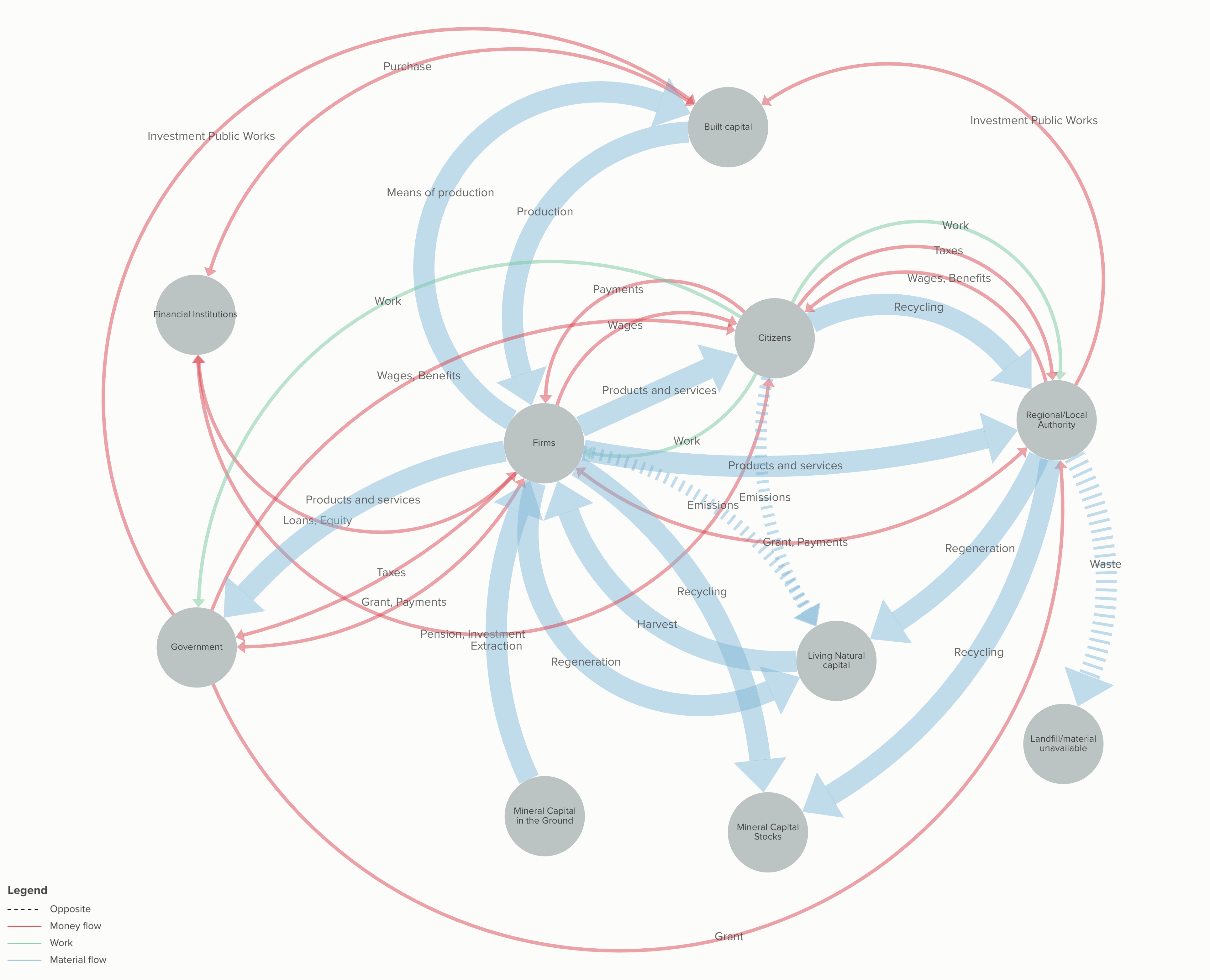
Following on from the article about the high-level system mapping (diagram above) I was trying, here is a recording of a PIVOT PROJECTS presentation.

Following on from the article about the high-level system mapping (diagram above) I was trying, here is a recording of a PIVOT PROJECTS presentation.
Planning a city or town to maximise symbiotic relationships between major flows of bio-material, water, heat and energy offers a way forward to living without fossil fuels. This video explains how it all hangs together.
Continue reading “Urban symbiosis and the nature-based economy”The following excerpt comes from a novel in progress with the working title “Common man”. It’s about a journalist who sets out to come up with an alternative form of world governance. The book is a product of, and features, imagestreaming, a technique of invention and creativity developed in the 80s by Dr. Win Wenger. For more information about imagestreaming, and about other imagestreamed novels and stories, visit this link. If you’d like to be kept up to date as new chapters get published, sign up using the form in the right-hand column. You might be able to follow the book better, especially this chapter, if you read the first chapters that explain imagestreaming. Read from the beginning by scrolling down all chapters here.
Continue reading “Chapter 7. Enter the continuum”Now home to 50% of the world’s population, expected to rise to 65%, cities are driving the development of our modern culture. But we are at a crossroads. Following the formation of the UN and now the broad agreement on the Sustainable Development Goals (SDGs) we are on our way to a world in peace. Several of the SDGs lay the foundation: eliminating hunger, poverty, homelessness. However, as our awareness of the need to transition to sustainability grows, so continues the degeneration of our natural resources and our societies. The trend is not halting. Humanity’s -our – shared project, true peace, needs everyone’s involvement and understanding.
Continue reading “Gardens of Regeneration and Peace”Guests are very welcome to this week’s Pivot Project meeting on Zoom at 4pm BST, 1st July 2022 where I, Stephen Hinton, will present some outcomes of Pivot Projects work. One product of the #21 Sustainable Infrastructure work group was a high-level system map. This map, featured recently on my blog, drew an unprecedented high level of interest with readership increasing over 5000 percent!
Has pivot got some insights the world is dying to know? In this week’s all hands, Stephen will go through the system map bit by bit, explain some of the conclusions from the #21 group’s work and open up to discussion of the role of infrastructure (and concomitantly, investment) in pivot.
Read the post here https://stephenhinton.org/2022/05/17/industrial-society-system-map/
And see the main #21 report on Researchgate here.
https://www.researchgate.net/publication/344405095_Pivot_Project_Report_from_Working_Group_21_Sustainable_Infrastructure_for_the_World_Post-Covid
Give us your email here to get the link. No charge!
Writing on his blog, Professor Jem Bendell explains the recent letter from scholars to the UN’s disaster event.
Professor Bendell says the SDGs represent a “failing approach, with all the indicators heading in the wrong direction”.
The UN reports countries have gone backwards on most of them. That is even before the inflation, energy and food polycrises of 2022. This failure was predicted at the outset, by scholars who identified the impossibility of promoting ecologically-demanding consumer lifestyles as the means of progress for all.
Says Bendell: “Our main proposal is that we all stop pretending that we can grow economies, reduce poverty and avert environmental disasters.”
As we have outlined here in this blog earlier, there needs to be a general acceptance of resource limits and a systematic approach to providing quality of life within planetary boundaries. The current disciplines of economics and public management along with the democratic system are inadequate for the task.
The systemic approach outlined in this blog’s earlier posts might provide a better start.
A recent post outlined a system map of the industrial society. One reason to map things out is to give you helicopter perspective where you might be able to better see where the system is not working. This post takes on one of the obvious reasons the industrial society is still not on track for the Paris agreement: the car.
Continue reading “Industrial system disconnect #1. The car”
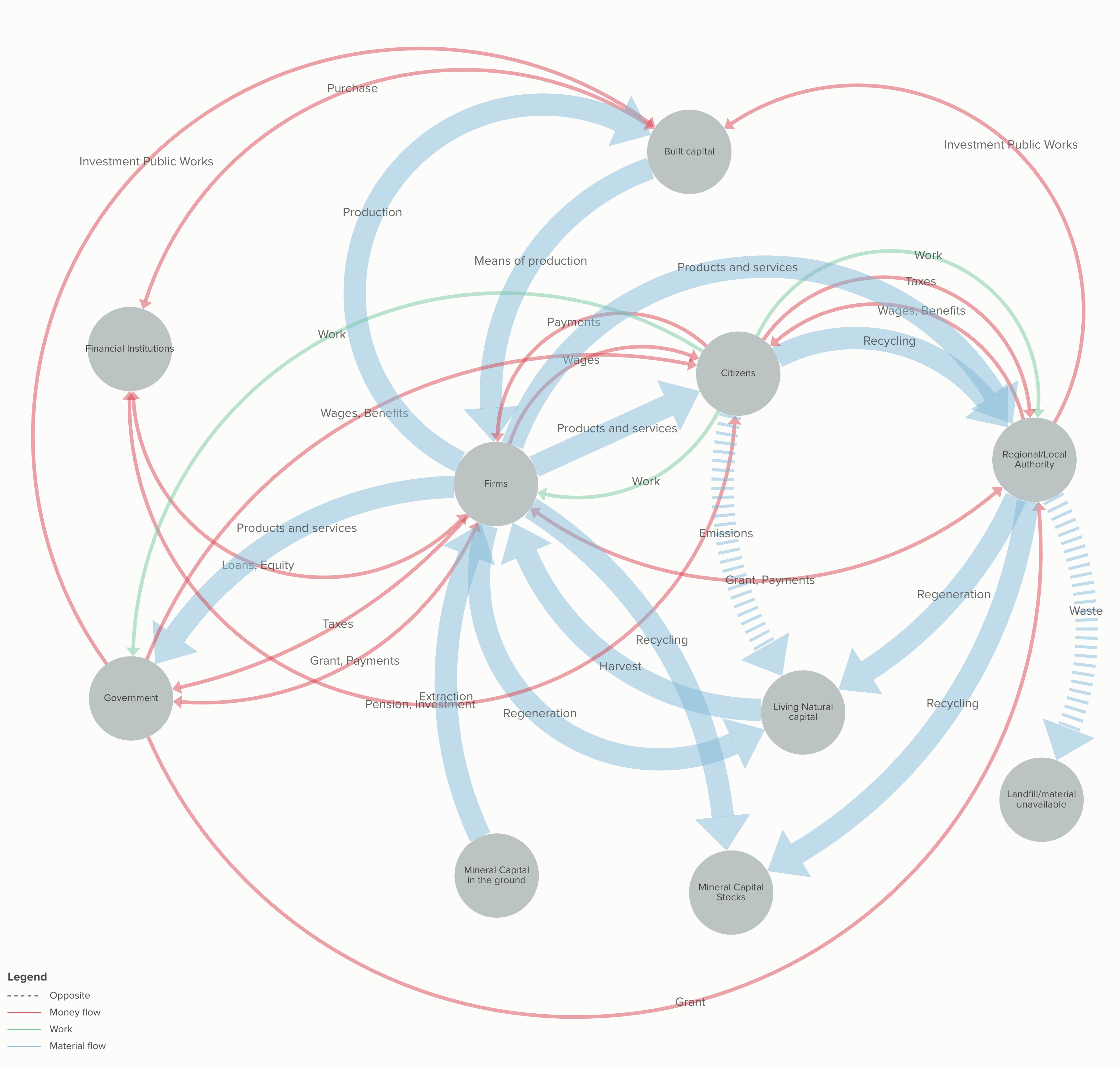
Above is the latest version of my system map, done in KUMU.IO.
This 15-minute video sets out a strategy for Sweden to go full circular economy – at a high level. It identifies challenges with major industry groups, along with strategies to meet the challenges and finishes with a checklist that can be applied to all infrastructure. Maybe I am making it too simple, or is it that it is hard to get a full picture?
My letter pleading with Nippon Steel to reverse the decision to log Ovakos forest, close to Hofors town was premature. Ovako have reversed their decision


 Stephen Hinton Consulting