
I heard that Marx struggled at the end of his life to learn enough mathematics to demonstrate his insights as calculations. He didn’t make it. But it is understandable. Society runs on expert calculation. We see them every day about the effects of interest rates and output and unemployment, estimates of share prices etc. The problem is, we are dealing with complexity and treating it like a simple case of “doing the maths” when mathematics is poorly equipped to do that.
Continue reading “Another way to model complexity in economics: game it!”Category: Circular Economy
Carbon accounting in the circular municipality

Material flows in different scales
You would expect that material flows would present their own logic for whether they are best handled in your own home or at a global level. Or scales in between. Factors like material density, value and frequency of use and transport would be obvious candidates.
This article focusses on the municipality and looks specifically at the material flows that contain carbon. And we’ll take a practical example: the area called Västra Gästrikland (VG) in the north of Sweden. This is an area comprising three municipalities in cooperation.
Continue reading “Carbon accounting in the circular municipality”This is why we need a philosophy of the circular economy.
We need a philosophy because we need help and guidance to a way of living that is peaceful with the Earth and coming generations.

Circular economy seems to be a more technical subject – about how we circulate atoms and how the monetary system works with that circulation. We might ask ourselves why have we embarked on describing the philosophy of the circular economy?
The circular economy for us is one of the plausible off-ramps away from material-use expansion and economic growth. It is therefore salient to major changes in our lives coming up. Now: our emotions are highly connected to our beliefs, and hearing about the need to transition away from fossil fuels, and feeling unsure of the future, it is likely that talk of this transition will wake up many emotions.
Sweden’s strategy to net zero: a look at the numbers
it is deeply instructive to take a look at Swedish numbers to see how they match the vision of Net Zero. An essay:
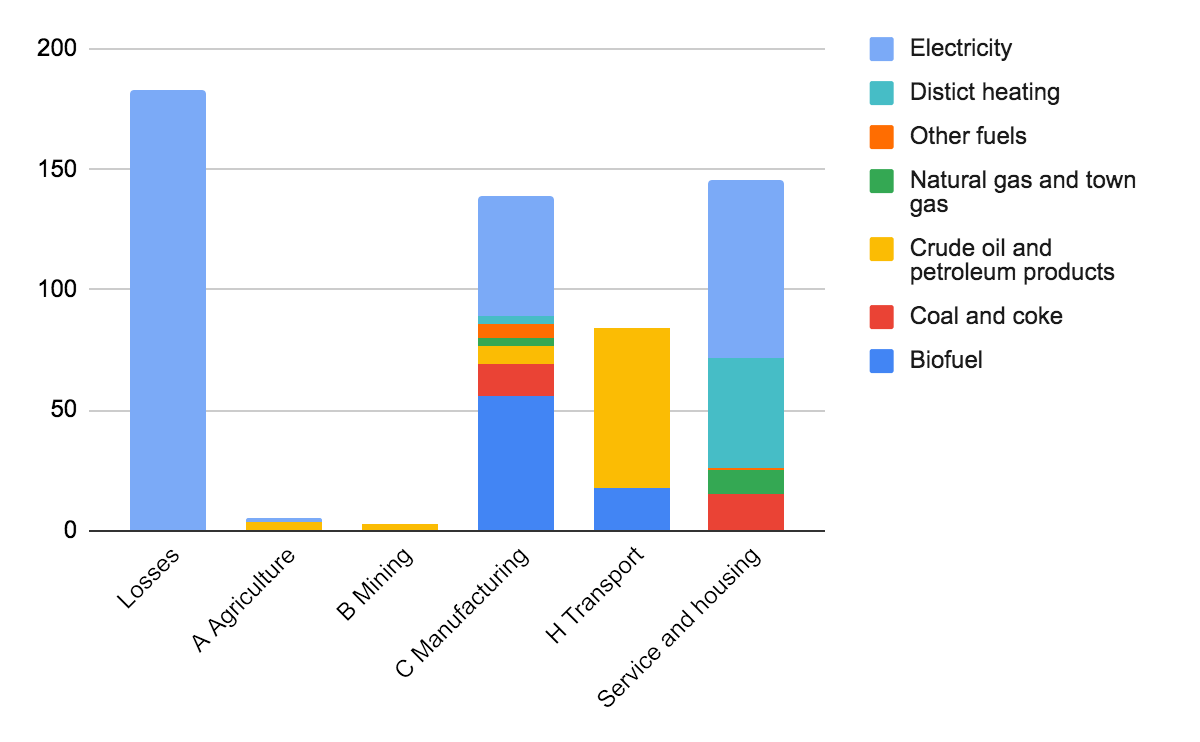
Sweden wants to be world-leading in the race to net-zero. Or at least that is the rhetoric you can find on official websites. For those interested in having an actual climate-safe future, it is deeply instructive to take a look at the numbers to see how they match the vision.
Continue reading “Sweden’s strategy to net zero: a look at the numbers”What to say at COP 27? The Swedish angle.

Million tons carbon dioxide equivalent per year.
Continue reading “What to say at COP 27? The Swedish angle.”Why the circular economy needs a new monetary system

This explainer video gives non-economists a view on how the monetary system works – we use a model called bathtub economics. The video also connects bathtub economics with the circular economy and points out a few areas where we need change if we are to go circular.
Opinion: reporting hides what is going on with finite resources
One thing you need to understand: the production apparatus (capitalism) has been battling for ultimate control over resources since the industrial revolution has begun. It has used its money to influence politics, rule making and everything else. It has won and it is a total disaster.

One thing you need to understand: the production apparatus (capitalism) has been battling for ultimate control over resources since the industrial revolution has begun. It has used its money to influence politics, rule making and everything else. It has won. This is disastrous for them and for us as workers and citizens. of the Earth. To understand why, you need to look into their materiality .
System map: naïve or insightful?
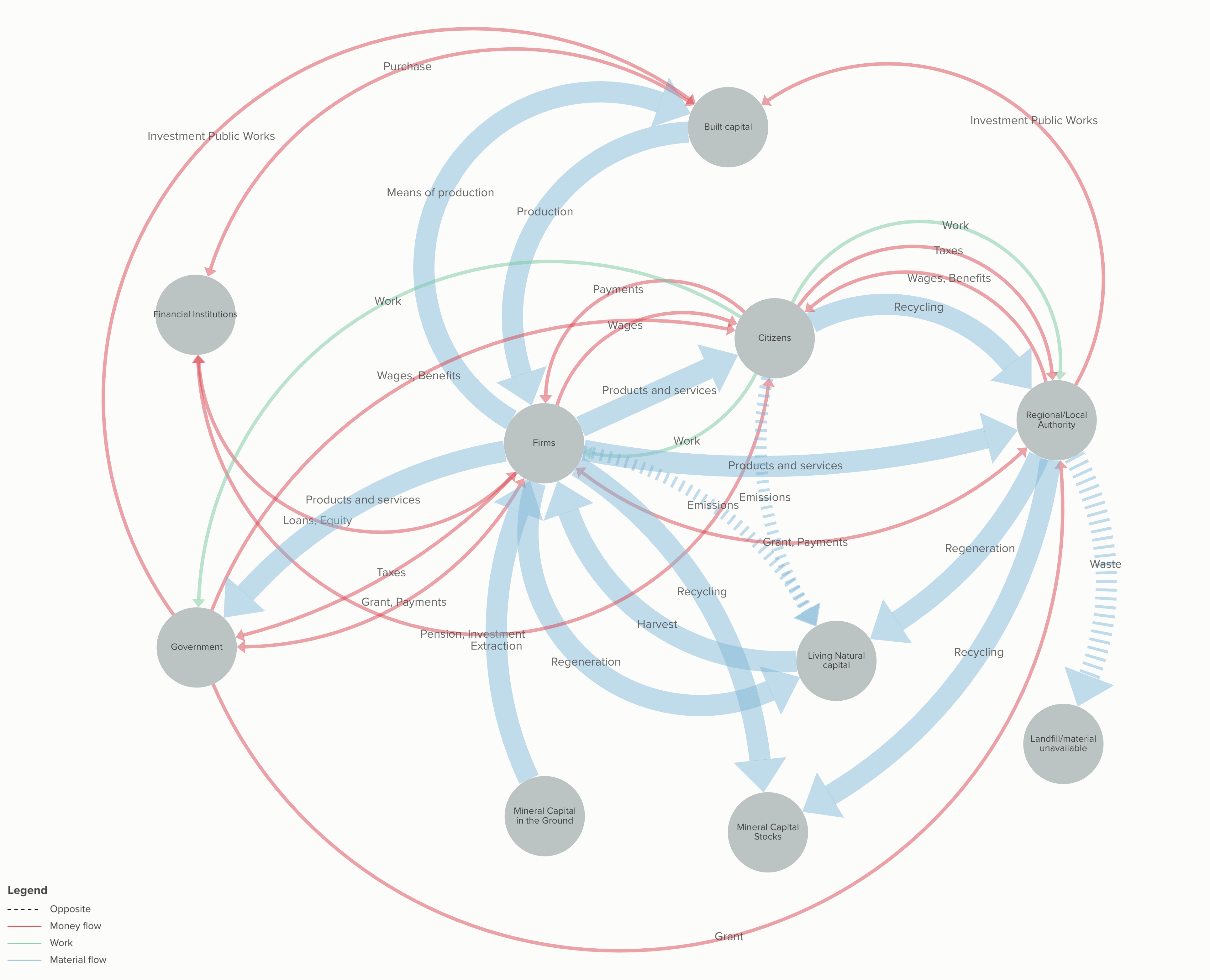
Following on from the article about the high-level system mapping (diagram above) I was trying, here is a recording of a PIVOT PROJECTS presentation.
Urban symbiosis and the nature-based economy

Planning a city or town to maximise symbiotic relationships between major flows of bio-material, water, heat and energy offers a way forward to living without fossil fuels. This video explains how it all hangs together.
Continue reading “Urban symbiosis and the nature-based economy”Gardens of Regeneration and Peace
Now home to 50% of the world’s population, expected to rise to 65%, cities are driving the development of our modern culture. But we are at a crossroads. Following the formation of the UN and now the broad agreement on the Sustainable Development Goals (SDGs) we are on our way to a world in peace. Several of the SDGs lay the foundation: eliminating hunger, poverty, homelessness. However, as our awareness of the need to transition to sustainability grows, so continues the degeneration of our natural resources and our societies. The trend is not halting. Humanity’s -our – shared project, true peace, needs everyone’s involvement and understanding.
Continue reading “Gardens of Regeneration and Peace”
