
This is a letting my heart out moment and I can’t promise it is going to be coherent. But I see some very important things that have happened recently as stakes in the new ground of economic thinking and in politics. There is a challenge laid down to find something new, built out of the old
Continue reading “The Challenge”Category: Envisioning Sustainable Futures
Newsletters from the future
Envisioning the sustainable future through a look into what would be in the news.
Continue reading “Newsletters from the future”A demand-side strategy for saving Swedish forests
Swedish forests are being clear-cut at such a rate that alarms bells are ringing about dramatic loss of biodiversity and old-growth forest. Once clear cut, it is unlikely that biodiversity and old-growth forest will return. Activists are calling for the preservation of the last remaining patches of bio-diverse forest. This must happen. However, we need to look at the demand side. What is driving this demand and are there demand-strategies available?
Continue reading “A demand-side strategy for saving Swedish forests”Swedish energy and climate planning goes normative. That poses questions
This year, 2025, is the year Swedish local authorities are tasked with preparing for the Green Revolution: To make sure the Paris agreements are reached, to fulfill EU directives on nature, AND to prepare for shocks from the ever-increasing weather volatility.

Pattern language is useful in communicating alternatives that work.
Pattern language is a concept that describes a structured method of solving recurring problems in a specific context by using standardized solutions, or “patterns.” Each pattern is a tried-and-tested solution to a common issue that can be reused across different situations, forming a “language” of solutions.
All over the world, alternatives to the fossil-addicted way of living are up and running. However, these alternatives are rarely featured or communicated as they are drowned out by predominant paradigm of industrial capitalism.
Continue reading “Pattern language is useful in communicating alternatives that work.”What is a municipality to do? Abandon “progress” would be a reasonable strategy.
Does a good life entail pursuing progress? As a local politician my focus is turning to adapting society to extreme weather. And a supportive, inclusive culture. Kindness is good for a feeling of well-being.
As a local politician I’ve been involved in dialogue around strategy for 2025. The process will result in a plan to be agreed in September this year (2024) for next year. My group is responsible for the built environment – in Sweden the municipality has a monopoly on built environment planning as well as domestic waste, which brings great responsibility with it. Faced with the fact that warnings from the IPCC have gone unheeded, (use of fossil fuels has increased year on year) we concluded that our #1 priority is to prepare for the consequences of 1.5 degrees. Ideas on pursuing “progress” seem so last century. But how do you put a management system in place to achieve preparedness? How do you ensure a place is good one to live in? Can we have prosperity as our aim?
Continue reading “What is a municipality to do? Abandon “progress” would be a reasonable strategy.”Applying Real Capital to the Circular Firm
Several thinkers (including, for example, Boyd 2020 and Hazel Henderson) have suggested that the concept of real capital – or multi-capital – be introduced into the political economy to aid decision-making at policy level as well at corporate level. This may overcome one of the failings of standard economics: Policy makers often rely on economists to provide their decision bases. However, one of the failings of standard economics when preparing decision bases for policy makers, is that anything that cannot be valued in money is seen to have no value or little value. The Earth does not send a bill for the use of its atoms so the stewardship of the material world is left out. Without a comprehensive valuation framework, policy makers and strategists are likely to miss the full picture by just relying on monetary values and make decisions that could be detrimental to society, counter to the intentions of the policy.
This article gives a general explanation of the category of real capital that is built capital, and how to use its valuation in preparing decision bases. The Real Capital approach gives a more robust decision basis, helping identify long term investment needs and policy that steers investment and activities to avoid capital degeneration and promote capital regeneration.
Continue reading “Applying Real Capital to the Circular Firm”The “C” of the ABC of supply chains is the keystone of circularity
The last article explained that, if you are looking to develop policy to drive the circular economy, then it is useful to divide supply chains up in their industrial classification. You need to look at one in particular, the keystone holding it all up – C, manufacturing. And in manufacturing, you need to focus on built capital – the capability and performance of the actual infrastructure used in manufacturing.
Continue reading “The “C” of the ABC of supply chains is the keystone of circularity”It’s not the technology, it’s the social organisation that will save us.
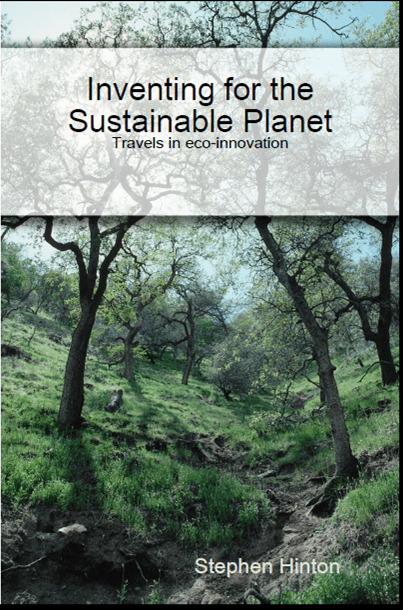
Back in 2008 I published a novel, “Inventing for the Sustainable Planet”. It follows technical writer Max Wahlter as he uses creativity techniques to invent sustainable technology. He was hoping to sell some to augment his measly salary.
Continue reading “It’s not the technology, it’s the social organisation that will save us.”Trying out a water walk
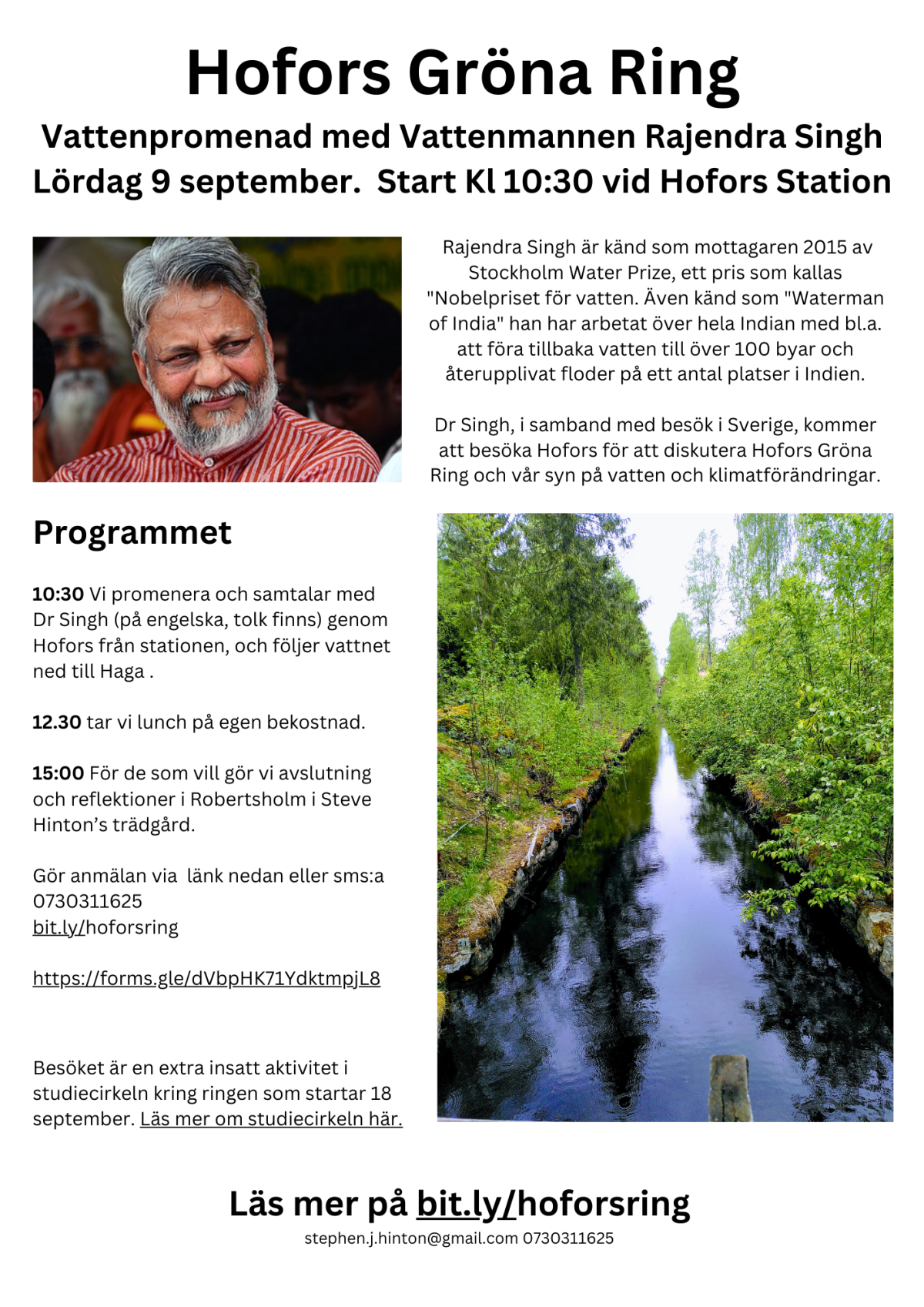
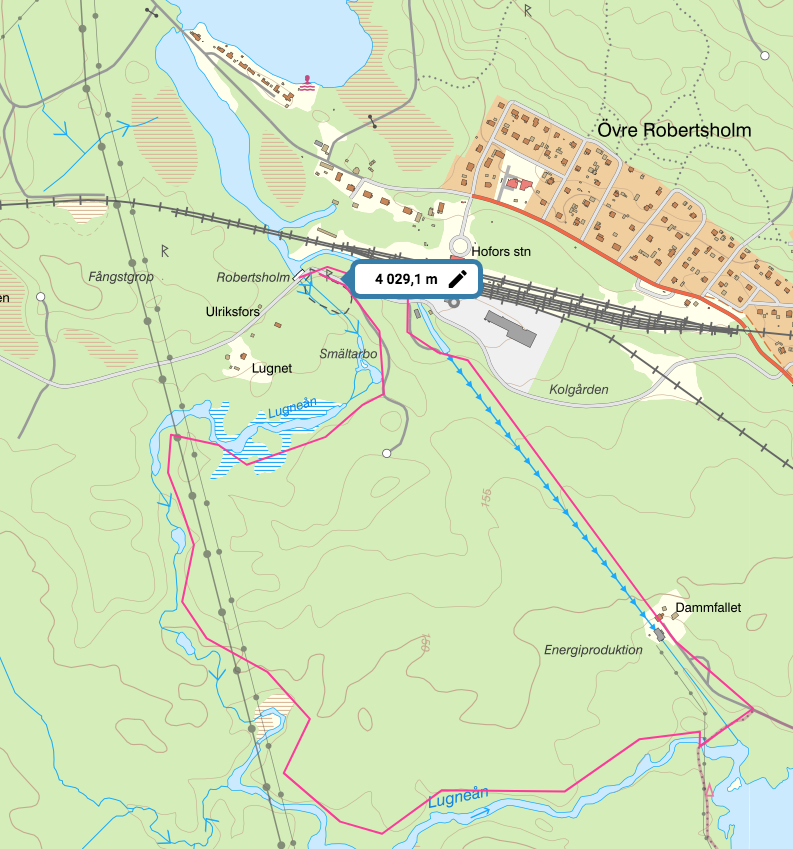
One possible round route of 4 km following the river Lugneån that feeds into the river Hoån and the hydroelectric installation that provides Hofors with electricity.
Rivers are held as sacred in India. It is not uncommon for people to undertake long pilgrimages to walk from their source to the sea. The People’s Water Commission on Drought and Floods, https://pwcdf.org/ an NGO co-founded by the International Association of Advanced Materials, based in Ulrika, Sweden, has had the idea, inspired by the Indian example, that people in their local areas set up a water walk to better engage with the water systems in their local areas. One of the main purposes would be to engage people in preparing for possible droughts and floods as the climate changes.
Continue reading “Trying out a water walk” Stephen Hinton Consulting