Passenger cars – the inconvenient truth

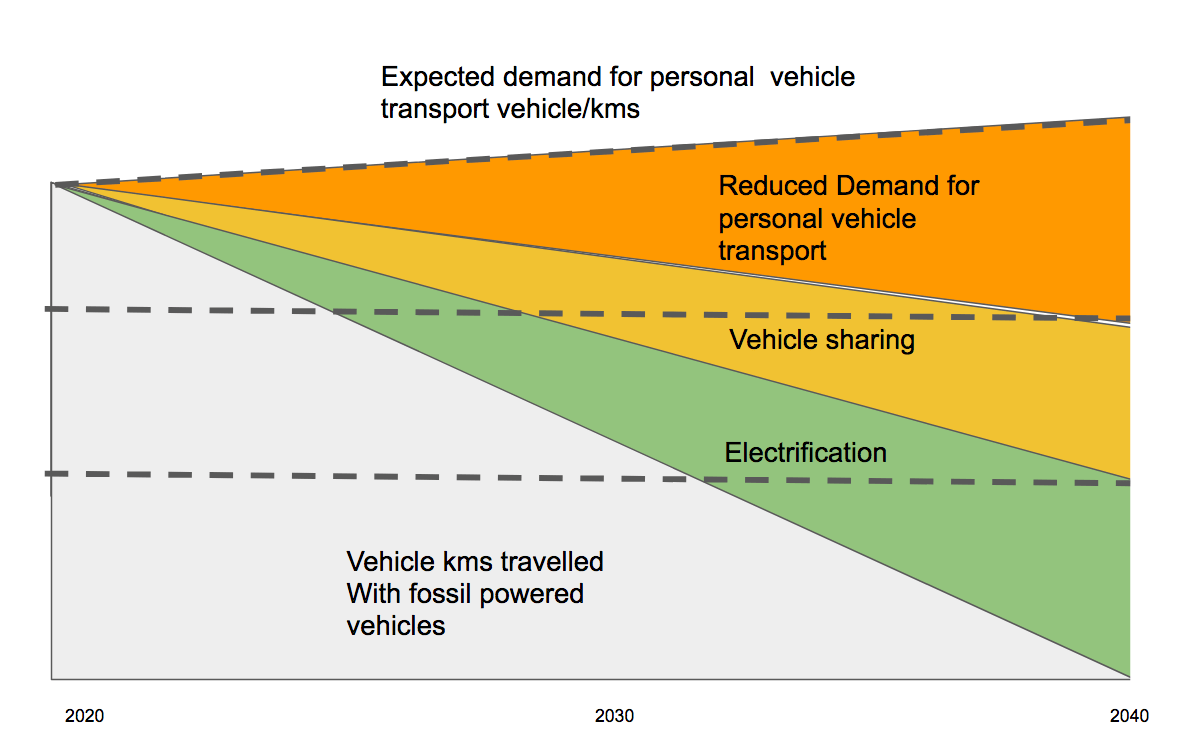
The Sankey diagram below covers Sweden but could probably apply to most of Europe and the US. It shows the total energy input into the country and what it is used on. It tells us an inconvenient truth that no-one seems to be talking about: domestic CO2 emissions come largely from use of passenger cars. If we are serious about killing CO2 we have to look at killing the car as we know it. We have hardly started to even dare have that conversation. The other inconvenient corollary is that our transport system is oil-dependent. And oil is finite. We need to redesign from the ground up the way we arrange things. It is high time. Let me explain.

Continue reading “Passenger cars – the inconvenient truth”

Models of sustainability

I know that the term sustainable is old fashioned, and people prefer “regenerative” for many good reasons. However, there are good reasons to take a look back at what sustainability is. One of them is that there are already well-accepted and widely used standards frameworks that, if put together, could give governments, local authorities and corporations best practice guidelines. That indeed would be a lot better than People, Planet, Profits triple bottom line thinking as I will explain.

Continue reading “Models of sustainability”

Imagestreaming – use it to check your understanding

Beachhead is an imagestreaming technique (See more here if you are unfamiliar with imagestreaming) that was designed to help people solve problems. The main question to be formulated goes something like “take me to a place that has solved the XXX problem and now exhibits XXXX”.

Having experienced the solution, one variant of the technique is to ask about how they implemented it and to go back in time.

Sometimes, however, we find ourselves thinking over a solution we already have and would like to try and implement – a solution that we got via another creative method. We have probably thought through how we will introduce, implement and scale the solution. This could be anything from a major shift at work to putting in a greenhouse at home.

This is the ideal opportunity to stop up a second and do a check via imagestreaming. Beachhead the solution asking to be taken to a place that has implemented just your idea. Take your time to go around, ask questions and look into a multiple array of angles.

Try it – you might just find a few unexpected potholes to avoid and pick up some really good synergies you haven’t thought of.

Remember to be thorough with verification and note down all questions that come up.

Let me know in the comments section how you get on!

Train thoughts: can we avoid flying?

As a circular economy aficionado, environmental enthusiast and consultant I always stress the importance of living environmentally. I ought to walk the talk, too. A great opportunity came up the other day when I was invited to  conference in Barcelona, and had the time to travel by train. I live in Stockholm, Sweden so it is not exactly next door.

Continue reading “Train thoughts: can we avoid flying?”

Exploring sustainable lifestyles through cases

Out now, this research paper gathers case studies from all over the world to try to understand the direction of development, possibilities and challenges to living in a sustainable way.

Sustainable Lifestyles Policy and Practice: Challenges and Way Forward provides an overview of the current (2019) situation for sustainable lifestyles globally.  It includes 32 case studies from around the world, showing on-going efforts to support the transition to sustainable ways of living.

Continue reading “Exploring sustainable lifestyles through cases”

Simple quick fixes to capitalism you never knew could be done

My recent article on how come capitalism is an extractive practice, and the later explainer of how it degrades real capital got, for me at least, a lot of interest. Very few, however, asked what could be done about it. Once you know the problem you are a long way to solving it. There are several ways to turn the extractive nature of capitalism around, and they are surprisingly simple. Read on!

Continue reading “Simple quick fixes to capitalism you never knew could be done”

Stockholm investment dialogue report

We had a great event last week, with researchers, investors, impact investors, SDG activists, a bank and a wide range of other stakeholder types represented. The aim was to share the journey that we at Re Equity Partners have taken over the last four years from the idea to create a fund to invest in regeneration and peace to the investment framework we have today.

Continue reading “Stockholm investment dialogue report”