As a circular economy aficionado, environmental enthusiast and consultant I always stress the importance of living environmentally. I ought to walk the talk, too. A great opportunity came up the other day when I was invited to conference in Barcelona, and had the time to travel by train. I live in Stockholm, Sweden so it is not exactly next door.
Out now, this research paper gathers case studies from all over the world to try to understand the direction of development, possibilities and challenges to living in a sustainable way.
Sustainable Lifestyles Policy and Practice: Challenges and Way Forward provides an overview of the current (2019) situation for sustainable lifestyles globally. It includes 32 case studies from around the world, showing on-going efforts to support the transition to sustainable ways of living.
Stephenhinton.org just learned that the aggregator FEEDSPOT has this blog listed as one to the top 20 sites on circular economy. See the full list here.
My recent article on how come capitalism is an extractive practice, and the later explainer of how it degrades real capital got, for me at least, a lot of interest. Very few, however, asked what could be done about it. Once you know the problem you are a long way to solving it. There are several ways to turn the extractive nature of capitalism around, and they are surprisingly simple. Read on!
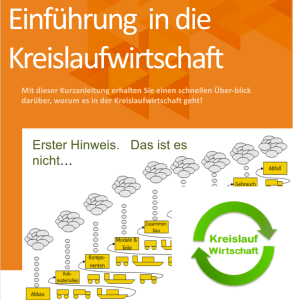
We are pleased to anounce the German arm of our Circular Economy Training is getting up to speed with the release of the German version of our FREE downloadable booklet.
If you prefer talking about the circular economy in German, this is for you. Get yours here!
We had a great event last week, with researchers, investors, impact investors, SDG activists, a bank and a wide range of other stakeholder types represented. The aim was to share the journey that we at Re Equity Partners have taken over the last four years from the idea to create a fund to invest in regeneration and peace to the investment framework we have today.
Reposted from the site for teachers maths4sustainability. This particular problem might be of interest to regular readers – it presents the idea of energy slaves which is one of the biggest challenges facing circular economy.
Simply put, the circular economy is one where biological materials are harvested and returned in a way that preserves, indeed regenerates, eco systems. Materials taken from below the earth, like minerals, stay in circulation. However, the notion could contain more. With eco systems preserved and with a high availability of minerals peoples’ basic needs could be met and a new era ushered in where there is enough for everyone. The circular economy – if introduced right – could help bring peace.
Consider the following:
From a starting point where we recognise people need peace, the circular economy can be set up to provide a basis for a world with a culture of peace.
By making resources abundant and available to all, the ability to make a decent living within natural limits comes into everyone’s grasp.
A culture of peace is even a culture of peace with each other. By eliminating the need to struggle all day every day just to meet basic needs gives people more time for personal growth, to find peace with themselves.
Much of the conflicts in society are eliminated when peoples’ basic needs are met.
Nothing stops a bullet like a job.
Father Greg Boyle
By harvesting biological material responsibly, and keeping minerals in circulation the circular economy reduces the burden on the Earth and indeed lays the ground for the ability for future generations to be able to fulfil their needs.
The Circular Economy provides the opportunity for everyone who needs a job to have one. Once gone, the fossil energy we use to extract, move and dispose of stuff will need to be replaced by the work of many hands.
The Circular economy is one which provides basic security in harmony with the Earth. Security of the basics – including the opportunity to find meaningful work – is a good start towards peace.
The Circular Economy provides the opportunity for everyone who needs a job to have one. It ensures that resources are abundant for needs and eliminates the need for people to struggle against each other to make ends meet. People get time and space to find peace in themselves, and live in a way that is in peace with the Earth, eliminating one of the major causes of conflicts between people.
From the introductory booklet available from the Academy of Invest in Peace
Stockholm 3rd October 18:00 – 21:00. Fund Managers RE Equity and partners are launching a series of dialogue evenings around how to fund the ambitions of the SDG and beyond.
The evening ties in with the recent video from Greta Thunberg and George Monbiot urging us all to concentrate on Preserving Nature, Restoring its carbon sequestration functionality (among other things) and Funding regenerative society.