I thought I’d help #cop27 out by providing a decision tree for policy makers. Rather simplified, I think it needs to match the level of public dialogue going on. Feel free to suggest additions/corrections.
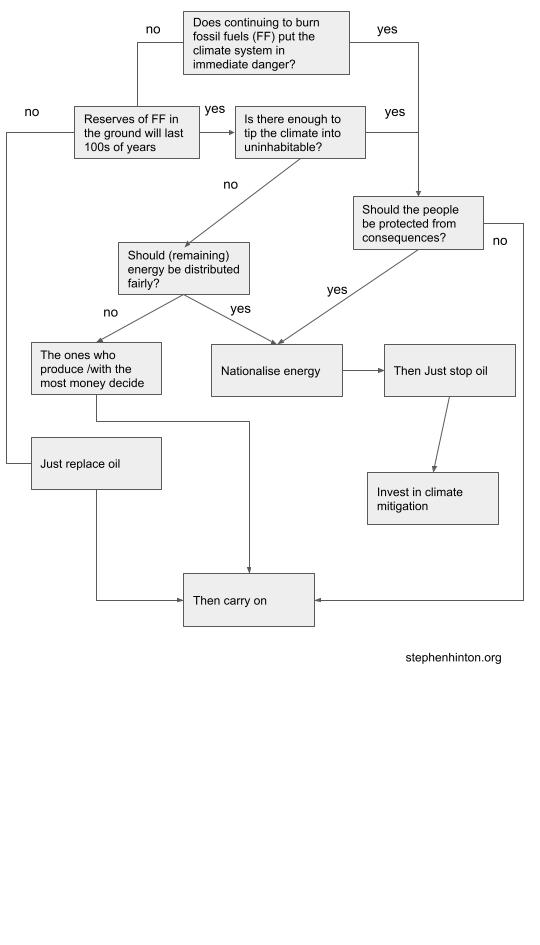

I thought I’d help #cop27 out by providing a decision tree for policy makers. Rather simplified, I think it needs to match the level of public dialogue going on. Feel free to suggest additions/corrections.

Million tons carbon dioxide equivalent per year.
Continue reading “What to say at COP 27? The Swedish angle.”Copenhagen aims to be the first carbon neutral capital by 2025. This article explains how they plan to do it and hints at several obstacle along the way.

Copenhagen aims to be the first carbon neutral capital by 2025. Their report CPH 2020 Roadmap 2021-2025 lays out the challenges: fossil-based emissions come from two main sources: energy production and transport. The city aims to introduce some forty-seven different initiatives to completely remove fossil emissions from energy production and reduce transport emissions by just over 11% on 2018 levels.
FAST FACTS
AREA: Copenhagen city
POPULATION: 620 000
EMISSIONS 2018: 1 500 000 tonnes CO2 per year
BASELINE PROJECTION: 630,000 tonnes CO2 per year
EMISSIONS 2050 with roadmap: 430,000 tonnes CO2 per year
ROADMAP REDUCTION: 200,000 tonnes CO2 per year
NUMBER OF ROADMAP MEASURES: 47
The bulk of reductions, 855,000 tons of CO2, will come from investments in renewable energy production. By 2025, Copenhagen’s production of electricity and heating will be mainly based on wind, biomass, geothermal energy, and waste. The district heating will be carbon neutral and the city will produce green electricity exceeding its consumption, in order to offset remaining CO2 emissions. The excess of green electricity will be exported to other parts of Denmark.
Another way to reducing fossil fules in energy consumption is to reduce need for consumption. The Copenhagen plan contains measure to stimulate building insulation and smart energy regulation.
More than half of Copenhageners use bicycles as their main means of transport. The Climate Plan calls for 75% of all trips in Copenhagen to be on foot, by bike, or via public transport. The city also aims to make public transport carbon neutral and increase its use by 20%.
We will be discussing these plans from several perspectives in future blogs. For now, the plan has stirred controversy, see for example this article from The Conversation which says that reliance on unproven technology and external funding can both upset the best laid plans.

The Water, Air and Food Awards, WAFA, is a Copenhagen-based NGO dedicated to identifying initiatives that show practically what can be done to ensure water and food security and clean air.
By offering an annual award, WAFA identifies and showcases initiatives already working to remediate the earth’s environmental and social challenges.
The prestigious Award Events communicate positive messages of hope and invite sponsoring and partners to further support, spread and build on these grass-roots innovations.
Since 2010 WAFA over 400 applicants have gained approval and 14 have been awarded from countries as far apart as Canada, Jordan and India.
This year, the general public will be invited to vote for four winner among 14 finalists. To get informed about when voting opens, sign up for WAFA’s newsletter.
I am currently acting Program Office manager, and we are looking for several volunteers to take us from where we are today to the Award Ceremony on the 7th December.
This explainer video gives non-economists a view on how the monetary system works – we use a model called bathtub economics. The video also connects bathtub economics with the circular economy and points out a few areas where we need change if we are to go circular.
One thing you need to understand: the production apparatus (capitalism) has been battling for ultimate control over resources since the industrial revolution has begun. It has used its money to influence politics, rule making and everything else. It has won and it is a total disaster.

One thing you need to understand: the production apparatus (capitalism) has been battling for ultimate control over resources since the industrial revolution has begun. It has used its money to influence politics, rule making and everything else. It has won. This is disastrous for them and for us as workers and citizens. of the Earth. To understand why, you need to look into their materiality .
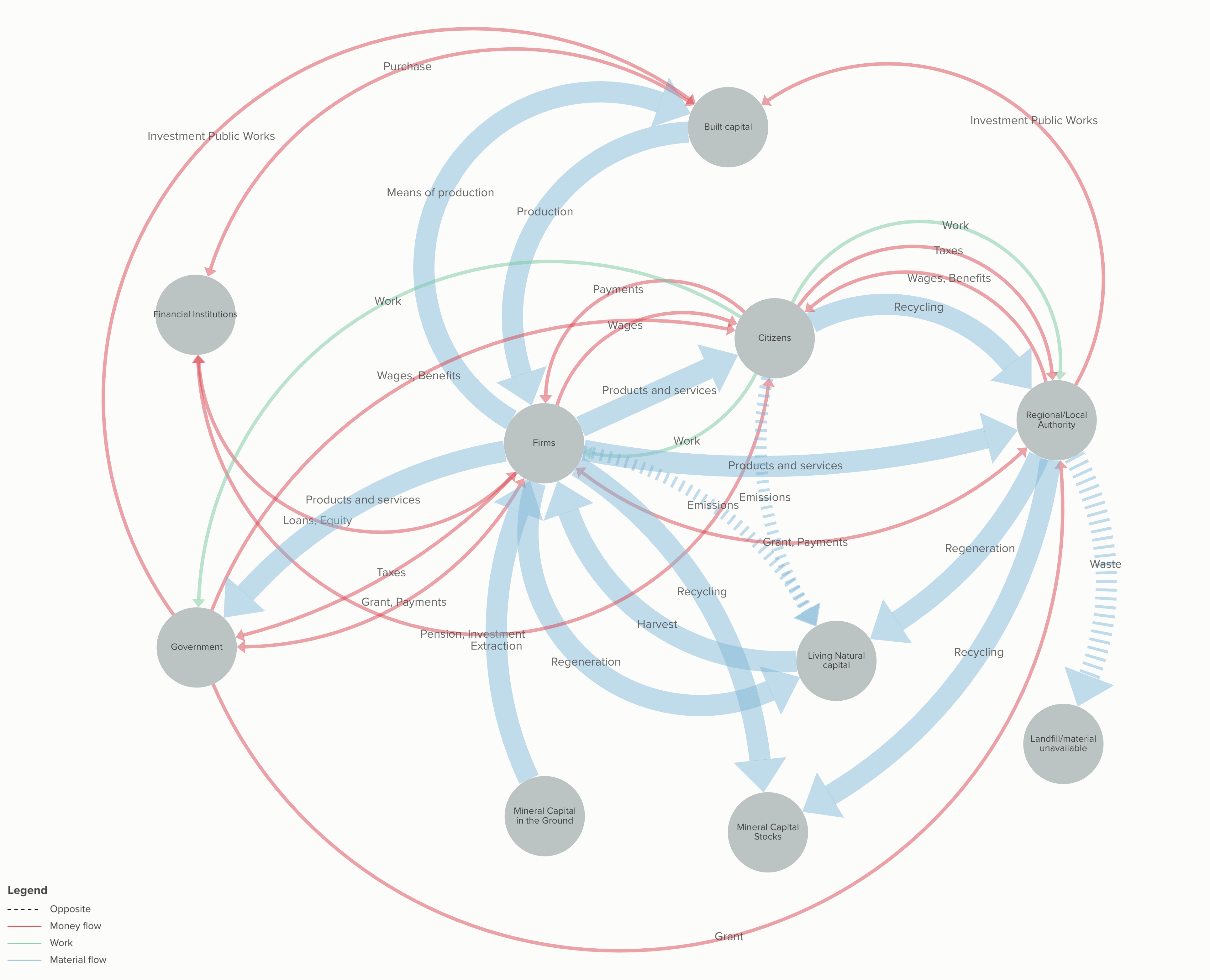
Following on from the article about the high-level system mapping (diagram above) I was trying, here is a recording of a PIVOT PROJECTS presentation.
Planning a city or town to maximise symbiotic relationships between major flows of bio-material, water, heat and energy offers a way forward to living without fossil fuels. This video explains how it all hangs together.
Continue reading “Urban symbiosis and the nature-based economy”The following excerpt comes from a novel in progress with the working title “Common man”. It’s about a journalist who sets out to come up with an alternative form of world governance. The book is a product of, and features, imagestreaming, a technique of invention and creativity developed in the 80s by Dr. Win Wenger. For more information about imagestreaming, and about other imagestreamed novels and stories, visit this link. If you’d like to be kept up to date as new chapters get published, sign up using the form in the right-hand column. You might be able to follow the book better, especially this chapter, if you read the first chapters that explain imagestreaming. Read from the beginning by scrolling down all chapters here.
Continue reading “Chapter 7. Enter the continuum”Now home to 50% of the world’s population, expected to rise to 65%, cities are driving the development of our modern culture. But we are at a crossroads. Following the formation of the UN and now the broad agreement on the Sustainable Development Goals (SDGs) we are on our way to a world in peace. Several of the SDGs lay the foundation: eliminating hunger, poverty, homelessness. However, as our awareness of the need to transition to sustainability grows, so continues the degeneration of our natural resources and our societies. The trend is not halting. Humanity’s -our – shared project, true peace, needs everyone’s involvement and understanding.
Continue reading “Gardens of Regeneration and Peace”


