
The last article explained that, if you are looking to develop policy to drive the circular economy, then it is useful to divide supply chains up in their industrial classification. You need to look at one in particular, the keystone holding it all up – C, manufacturing. And in manufacturing, you need to focus on built capital – the capability and performance of the actual infrastructure used in manufacturing.
Continue reading “The “C” of the ABC of supply chains is the keystone of circularity”Category: Circular Economy
The ABC of Supply Chains shows the disconnects killing the planet
Fortunately for us, Sweden keeps a pretty comprehensive set of statistics 1 on how its industry performs. It takes a while to retrieve them and put them together at the highest levels, but the exercise reveals som particular insights about how the developed world works. You could say that supply chains represent the workings of the global super organism. When you look at the system from above, you see some glaring disconnects. It gives a good idea of who is doing what to the planet, and who is earning the money from it. They are definitely different industries, if not different people.
Continue reading “The ABC of Supply Chains shows the disconnects killing the planet”A carbon dioxide balance sheet for Sweden
Based on official statistics it is possible to put together a high-level balance sheet for Sweden’s carbon dioxide emissions and uptake. It does raise some interesting questions as to how the statistics are set up, but let us look at the overall picture – to better understand how the country can fulfil its ambition to be climate neutral by 2050.
Continue reading “A carbon dioxide balance sheet for Sweden”Real Capital – an explainer
Explainer: what is real capital. Real capital refers to resources used in producing goods and services without being entirely consumed. It encompasses natural, built, social, and human capital. Mature real capital has the capability to provide necessary services to the intended population. Evaluating the maturity level of capital can guide policy decisions and determine the interplay of different capital types, investment needs, and development goals.

Real capital defined
Real capital is defined as:
Something that is used in the production of
goods and services to society, but not used up.
Note that capital is necessary but not sufficient to provide services. The capital is utilised in the production system. There are several categorisation methods, but I prefer the following as described in the table below:
Continue reading “Real Capital – an explainer”2023: Looking Back in Anger-the realization it is too late to avoid hardship
2023 – the year I realised we are looking at the end of industrial civilisation as we know it.
Last year, some realizations hit me hard. For me, 2023 really saw the beginning of the end of what we might call the industrial way of life. For many years I have advocated transitioning to sustainability. Below I outline why I now think it is too late, instead the focus should be on mitigating the effects of destabilized weather patterns. It looks like several tipping points may be inevitable. At least we must prepare.
Continue reading “2023: Looking Back in Anger-the realization it is too late to avoid hardship”The Tax and Dividend mechanism. A simulation

One way to reduce fossil fuel in products is to, as suggested by The Swedish Sustainable Economy Foundation, introduce a progressive tax and dividend on fossil fuel.
Continue reading “The Tax and Dividend mechanism. A simulation”Supply chain modifications to run sustainably and circular
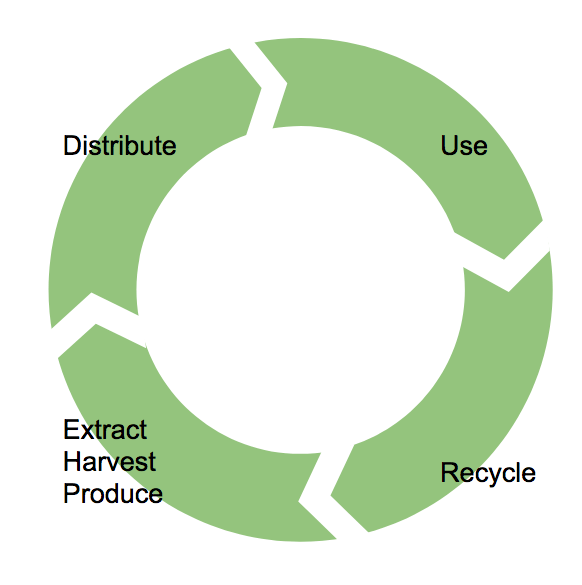
This video describes the types of industries that make up supply chains, and points at the areas where they need to adapt to circularity and sustainability.
The IPCC AR6: consequences for municipalities
Given the warming already locked in, as well as the lack of measures in place, municipalities should prepare for weather pattern instability as well as to be ready for fast changes in political will. The work of Igor Ansoff gives guidance.
ABSTRACT
This report looks at the consequences of the recent IPCC synthesis for municipal authorities in their longer-term planning. Although the main focus is Sweden, the report should be relevant to municipalities in other countries. It suggests that given the warming already locked in, as well as the lack of measures in place, municipalities should prepare for weather pattern instability as well as to be ready for fast changes in political will. The report suggests following the advice of strategist Igor Ansoff to set up capabilities to deal with a turbulent operating environment. This includes capability to monitor the situation, work with a range of scenarios and to ensure the organisation is agile enough to deal with unexpected changes, be they physical, social or political. The report suggests municipalities address three basic strategic questions covering global inaction, energy transition and food provision. It proposes a holistic approach analysing each measure to address climate instability on several dimensions to avoid, among other things, adaptation putting unfair pressure on the poorest.
Continue reading “The IPCC AR6: consequences for municipalities”
Another way to model complexity in economics: game it!
I heard that Marx struggled at the end of his life to learn enough mathematics to demonstrate his insights as calculations. He didn’t make it. But it is understandable. Society runs on expert calculation. We see them every day about the effects of interest rates and output and unemployment, estimates of share prices etc. The problem is, we are dealing with complexity and treating it like a simple case of “doing the maths” when mathematics is poorly equipped to do that.
Continue reading “Another way to model complexity in economics: game it!”Carbon accounting in the circular municipality

Material flows in different scales
You would expect that material flows would present their own logic for whether they are best handled in your own home or at a global level. Or scales in between. Factors like material density, value and frequency of use and transport would be obvious candidates.
This article focusses on the municipality and looks specifically at the material flows that contain carbon. And we’ll take a practical example: the area called Västra Gästrikland (VG) in the north of Sweden. This is an area comprising three municipalities in cooperation.
Continue reading “Carbon accounting in the circular municipality” Stephen Hinton Consulting