
I like simple. Especially in a complicated, hectic world. Here is a checklist in which I have collected all the basic questions a product manager should be able to answer. The list contains all the angles, or most of them, you need to investigate in order to go from product idea to product selling and making money.
Continue reading “Checklist for product development”Tag: Business
Not degrowth, but economic maturity
Economic growth sounds great! But as with all growth you have to ask yourself what it will look like when it’s fully grown. So too with the “economy”. I’m not talking about the monetary system that produces tokens and circulates these tokens around between citizens, companies, governments and back. I’m talking about the arrangement for keeping a roof over your head, food on your table and a load of other essential services.
Continue reading “Not degrowth, but economic maturity”The “C” of the ABC of supply chains is the keystone of circularity
The last article explained that, if you are looking to develop policy to drive the circular economy, then it is useful to divide supply chains up in their industrial classification. You need to look at one in particular, the keystone holding it all up – C, manufacturing. And in manufacturing, you need to focus on built capital – the capability and performance of the actual infrastructure used in manufacturing.
Continue reading “The “C” of the ABC of supply chains is the keystone of circularity”Circular economy in diagrams: where logic breaks down and where financial incentives can work
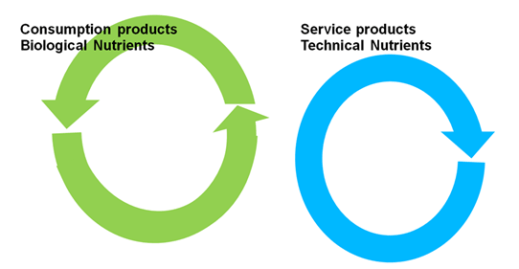
Are your circle economy diagrams confusing your audience? This article aims to help you communicate clearly. As a staunch aficionado of reaching a resilient economy through sustainability I am all for circle economy thinking- if it ensures people get food on the table and a roof over their heads. Unclear delivery will not help our cause. We talk of circle economy from two angles: economy as a form of housekeeping and economy in terms of monetary flows. These are not always the same thing. The final section suggests a solution.
 Stephen Hinton Consulting