Interviewed for the Swedish Christian newspaper Sändaren, Stephen Hinton sees Transition as a new growing folk movement. Link to the article here.


Interviewed for the Swedish Christian newspaper Sändaren, Stephen Hinton sees Transition as a new growing folk movement. Link to the article here.
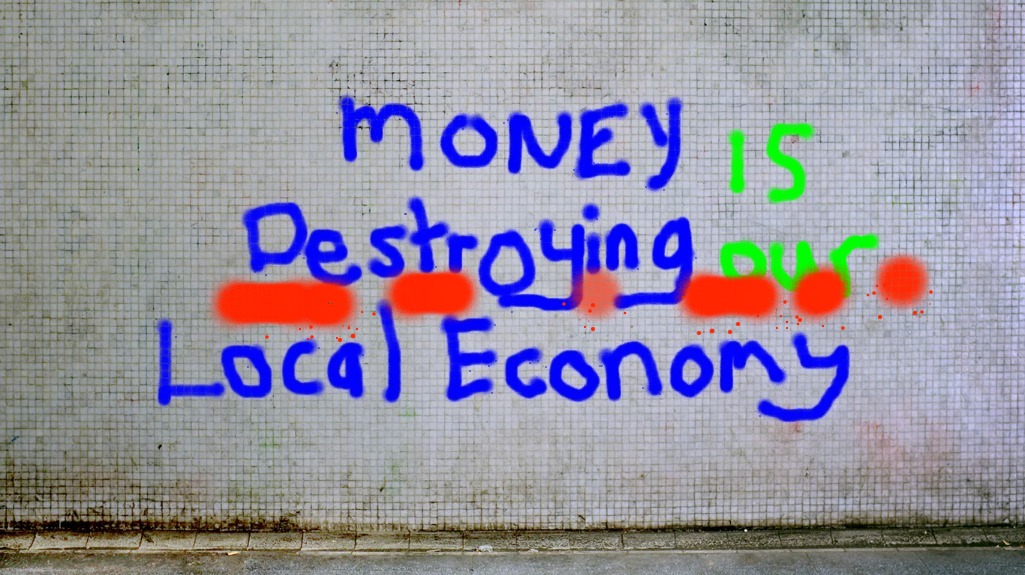 A recent report on local currency and local economy from Sweden, complied by Transition member Steve Hinton, sheds light on some of the pitfalls and opportunities for local community action. The report comes in the wake of a resilience project to create a “back-up” currency, envisioned as a preparedness tool should Sweden’s ubiquitous digital money system fail due to loss of electrical power over a longer period. Most money today in Sweden is digital, only a few percent is notes and coins. With its harsh winters and long distances, Sweden is particularly vulnerable. Continue reading “It’s money that is killing the local economy”
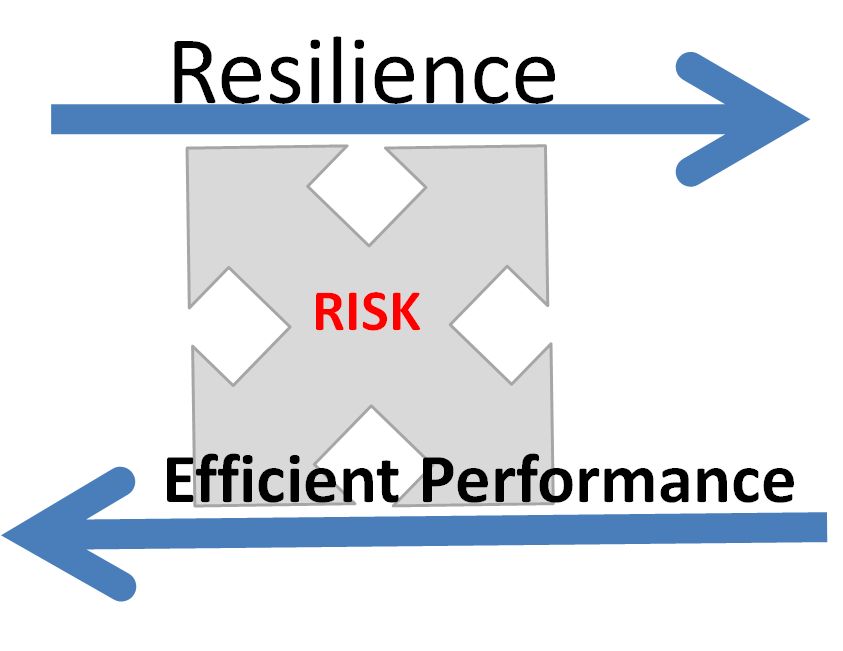
This month, the subject of risk and how we see risk has become even more apparent as the IPCC, the UN’s panel on Climate Change, releases its latest reports. Our very way of life is threatened according to how you read the risk estimates. Standing back and taking a cold look at the situation, many would ask themselves; “why are we taking such a risk?” The same question has been asked of Easter Islanders way back; ” how come they chopped down the last tree?”. (According to popular stories, the population collapsed and they cannibalized each other.) Continue reading “Pushing the risk envelope”
A recent report issued by the Swedish Sustainable Economy Foundation proposes putting a fee on phosphorus and nitrogen imports in order to stimulate the economy to run clean and protect the Baltic Sea. The Foundation calls it the Flexible Pollutant Fee Mechanism (flex fees). Although a fee will make some food more expensive, paradoxically the Foundation claims that the economy will be stimulated. More jobs, green ones at that, will be created as the Foundation proposes that the fees collected are returned to the economy stimulating the demand for green technology and new jobs. Compared to Cap and Trade, the Foundation sees flex fees as being a more effective way to price pollution.
Continue reading “Put a price on phosphorus to save our food production and the Baltic”
 New technology and economic instruments to achieve food security
See the recording, now available
Fast Facts:
OTHER MATERIAL: Flex fees video. Report on Phosphorus and the circular economy.
Continue reading “Webinar: ushering in the circular economy for phosphorus”
 Published on the 26th March, a new report from the Institute of Swedish Safety and Security, ISSS, written by fellow Stephen Hinton, sums up recent experiences with running workshops on local economic development, risk preparedness and voluntary currency. Two results speak volumes about the sustainability predicament we find ourselves in today. Firstly, in simulating creating a local currency most participants realized they had no idea of how their national currency was created. Secondly, it became clear that creativity and collaboration are held back when money is a bearer of scarcity.
From following what happened in the workshop simulations, it seems the best way to approach developing a resilient local economy is to start from where you are, who you are, and what you have. And collaborate. And get multi-skilled. Preferably organize into projects to focus energies. All of these factors are essential regardless of whether a currency or points system or any other system is used.
 Download the report here. ITK_report2
Read more about the ITK currency.
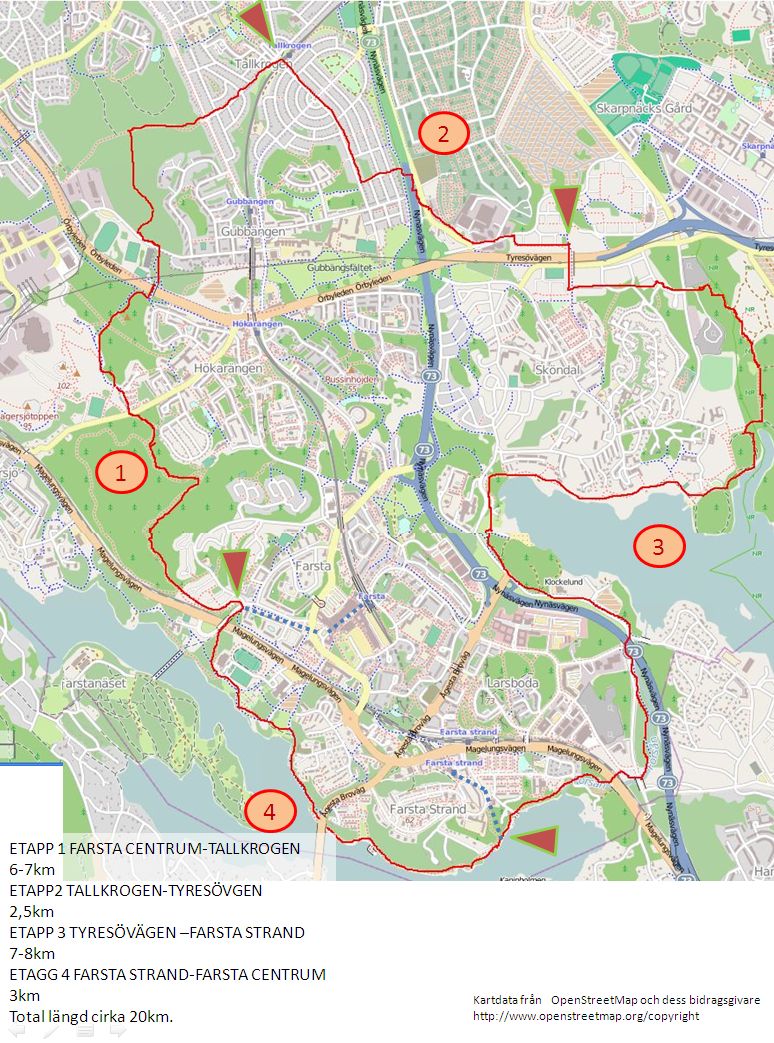 PLACE: Stockholm, Sweden
SITUATION: The local cultural center, with its youth theatre, music school and library is taking on a new challenge: to find creative ways to bring local citizens closer to sustainability.
Like charity, sustainability begins at home. Although for most people in a suburb, home functions as a place to sleep and be whilst away from work. Yet people need to engage as Stockholm is getting ready to embrace a fossil-free future. It intends to be fossil-independent already by 2030. Walking cities are surely in that vision.
FRAMING QUESTION: How can a suburb creatively engage residents in a way that fosters a sense of place, a sense of the challenges involved as the city moves away from fossil fuel dependence?
SOLUTION: Create a round suburb walk, publish a map and connect the map to a web-based discussion forum.
Continue reading “Case study: round-suburb walk starts to wake indigenuity”
The energy transition challenge is so huge that it requires every sector of society – civil society, corporations and authorities to be involved, separately and together.
And because every place is different, with its own demographics, geography, climate and installed base of infrastructure – not to say culture – we believe there is a good case to convene a municipality- wide cross sector collaboration.The scale of change presents opportunities too, to create the culture we want.
One of the instruments we are developing to assist this development is called the sustainable municipality matrix.
The matrix is a set of 25 dimensions, values on the horizontal axis and capital on the vertical. Addressing these dimensions will give stakeholders a view of the capability of a municipal area or similar to embrace change to sustainability. The horizontal axis represents human values and the vertical axis represents key capital categories including human, biological and social capital. Continue reading “Municipal Matrix”
Most circle economy diagrams tend to mislead readers. This article aims to put the record straight. It is not that I am against circle economy thinking, if it ensures people get food on the table and roof over their heads. But we should not allow sloppy thinking.
Let’s start with the theory
The aim of the circular economy is to retain and recycle technical nutrients in the economy and to cycle biological nutrients from the economy to the biosphere and back, and to utilize money to facilitate transactions and trade. This is shown below, without the money.
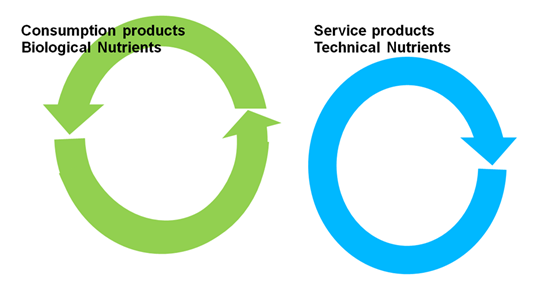
Biological nutrients come from the eco-system and comprise plant material and animal material like that in leaves, leather, twigs etc. These are part of essential services – like food, baskets, shoes that eventually return to the earth, are incorporated into new organisms and are used again.
Technical nutrients comprise metals and minerals like silica that are mined and end up in products like knives, electronics etc. In the circular economy they are reused and recycled in new products.
To make the diagram clearer we can add where they come from: the green is the eco system and the brown represents the geological layer of the Earth.
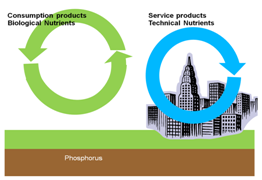
To make it even clearer, the service products are those that make up the technical infrastructure that the biological nutrients cycle within. Service products keep the technical infrastructure going. Consumption products, like food and fuel provide energy that is spent. We added the picture of the city to represent technical infrastructure.
But the biological products return to the earth and the ecosystem. There is no point in mining products and then putting them back. We need to add new parts to the diagrams.

In this new version the blue circle has a “leg” to represent the extraction of minerals etc from the geosphere. On the left, the green circle is moved to be in contact with the green strip representing the eco-system.
But we are still not done. The eco-system gets products from the geosphere.
In this final diagram we show how phosphorus us mined and brought from the geological layer into the biological nutrient cycle. Now we are closer to reality.
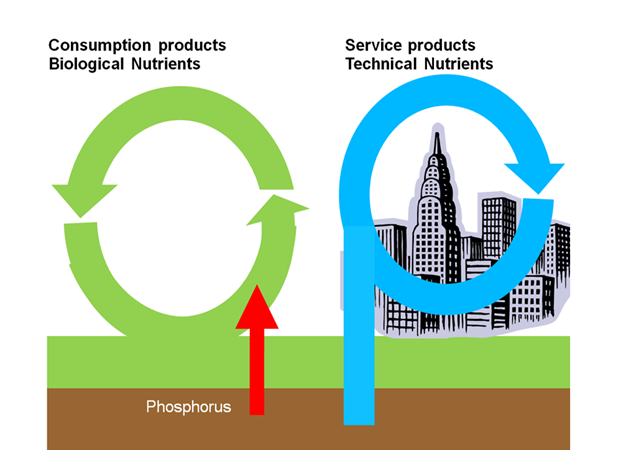
The diagrams above show how biological nutrients cycle around from the economic system back to the eco-system and out again. Pollution occurs when nutrients accumulate in the wrong places. Example of this include accumulation of phosphorus in watercourses where eutrophication results. Note that we have added the red arrow to represent phosphorus – which enters the economic system from mineral sources.
At first sight it might seem that the phosphorus is something that can circulate indefinitely. In practice, however large quantities wash into the oceans where they are, or have been up to now, irretrievable for practical purposes. This means the practice of mining must continue.
Mineral elements and other technical nutrient components from the non-living layer have no place in eco-systems and should be kept separate from them. Again from the diagram it looks as if iron, for example, once mined can be circulated indefinitely. Whilst true in theory, the practice of combining metals and other materials so they cannot be separated during manufacture, combined with the practice of waste disposal has meant that large quantities of potentially useful technical nutrients are in landfill unrecoverable for all practical purposes.
I recommend a flexible pollutant fee approach: by placing fee levying mechanisms at strategic points where substances enter the economy, and raising fees sufficiently at sufficiently frequent intervals, the market gets stimulated to introduce non-emitting alternative approaches. Especially if most of the fees are returned to the economy as a taxpayer refund.
This approach has been propagated by the Swedish Sustainable Economy Foundation, for one.
Fast Facts:
 Stephen Hinton Consulting