
What is a municipality to do? Abandon “progress” would be a reasonable strategy.

Does a good life entail pursuing progress? As a local politician my focus is turning to adapting society to extreme weather. And a supportive, inclusive culture. Kindness is good for a feeling of well-being.

As a local politician I’ve been involved in dialogue around strategy for 2025. The process will result in a plan to be agreed in September this year (2024) for next year. My group is responsible for the built environment – in Sweden the municipality has a monopoly on built environment planning as well as domestic waste, which brings great responsibility with it. Faced with the fact that warnings from the IPCC have gone unheeded, (use of fossil fuels has increased year on year) we concluded that our #1 priority is to prepare for the consequences of 1.5 degrees. Ideas on pursuing “progress” seem so last century. But how do you put a management system in place to achieve preparedness? How do you ensure a place is good one to live in? Can we have prosperity as our aim?

Continue reading “What is a municipality to do? Abandon “progress” would be a reasonable strategy.”

Applying Real Capital to the Circular Firm

Several thinkers (including, for example, Boyd 2020 and Hazel Henderson) have suggested that the concept of real capital  – or multi-capital – be introduced into the political economy to aid decision-making at policy level as well at corporate level. This may overcome one of the failings of standard economics: Policy makers often rely on economists to provide their decision bases. However, one of the failings of standard economics  when preparing decision bases for policy makers, is that anything that cannot be valued in money is seen to have no value or little value. The Earth does not send a bill for the use of its atoms so the stewardship of the material world is left out.  Without a comprehensive valuation framework, policy makers and strategists are likely to miss the full picture by just relying on monetary values and make decisions that could be detrimental to society, counter to the intentions of the policy.

This article gives a general explanation of the category of real capital that is built capital, and how to use its valuation in preparing decision bases. The Real Capital approach gives a more robust decision basis, helping identify long term investment needs and policy that steers investment and activities to avoid capital degeneration and promote capital regeneration.

Continue reading “Applying Real Capital to the Circular Firm”

The “C” of the ABC of supply chains is the keystone of circularity

The last article explained that, if you are looking to develop policy to drive the circular economy, then it is useful to divide supply chains up in their industrial classification. You need to look at one in particular, the keystone holding it all up – C, manufacturing. And in manufacturing, you need to focus on built capital – the capability and performance of the actual infrastructure used in manufacturing.

Continue reading “The “C” of the ABC of supply chains is the keystone of circularity”

The ABC of Supply Chains shows the disconnects killing the planet

Fortunately for us, Sweden keeps a pretty comprehensive set of statistics 1 on how its industry performs. It takes a while to retrieve them and put them together at the highest levels, but the exercise reveals som particular insights about how the developed world works. You could say that supply chains represent the workings of the global super organism. When you look at the system from above, you see some glaring disconnects. It gives a good idea of who is doing what to the planet, and who is earning the money from it. They are definitely different industries, if not different people.

Continue reading “The ABC of Supply Chains shows the disconnects killing the planet”

2023: Looking Back in Anger-the realization it is too late to avoid hardship

2023 – the year I realised we are looking at the end of industrial civilisation as we know it.

Last year, some realizations hit me hard. For me, 2023 really saw the beginning of the end of what we might call the industrial way of life. For many years I have advocated transitioning to sustainability. Below I outline why I now think it is too late, instead the focus should be on mitigating the effects of destabilized weather patterns. It looks like several tipping points may be inevitable. At least we must prepare.

Continue reading “2023: Looking Back in Anger-the realization it is too late to avoid hardship”

The Tax and Dividend mechanism. A simulation

One way to reduce fossil fuel in products is to, as suggested by The Swedish Sustainable Economy Foundation, introduce a progressive tax and dividend on fossil fuel.

Continue reading “The Tax and Dividend mechanism. A simulation”

Circular economy in diagrams: where logic breaks down and where financial incentives can work

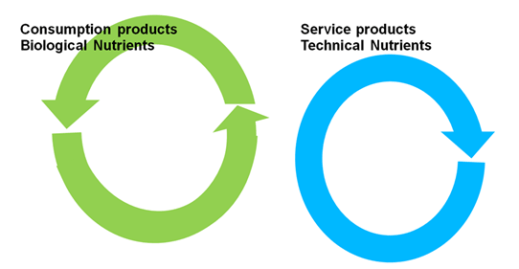
Are your circle economy diagrams confusing your audience? This article aims to help you communicate clearly. As a staunch aficionado of reaching a resilient economy through sustainability I am all for circle economy thinking- if it ensures people get food on the table and a roof over their heads. Unclear delivery will not help our cause. We talk of circle economy from two angles: economy as a form of housekeeping and economy in terms of monetary flows. These are not always the same thing. The final section suggests a solution.

fos1

Continue reading “Circular economy in diagrams: where logic breaks down and where financial incentives can work”