NEWSLETTER: EVERYTHING IS CHANGED

Climate change will force us to ditch old paradigms. Enterprise will go on even if capitalism doesn’t.

(republished from http://Signals.avbp.net) to subscribe click here.

http://www.youtube.com/watch?v=ktgEzXZDtmc

REPORTER AND AUTHOR NAOMI KLEIN RELEASES HER BOOK This Changes Everything: Capitalism vs. the Climate NAMING THAT CHERISHED PARADIGMS ARE BREAKING AS CLIMATE CHANGE ADVANCES AND THE PERFORMANCE OF CAPITALISM LOOKS EVER MORE SHODDY AS A WAY TO PROVIDE ESSENTIALS TO HUMANITY
Signals: Sooner or later the things we have been ignoring, brushing under the carpet, get named by brave individuals. Once a voice with enough authority and context gives it a name, it has to be dealt with. Naomi Klein, a brilliant reporter and sharp mind does just this in her new book.As she states clearly: Capitalism, since it was unshackled by the deregulation of the 1980s, has widened the gap between rich and poor. The top 3% held 55% of all wealth last year, up from 45% in 1989. The bottom 90% controlled 24.7% of wealth, according to statistics released this month by the Federal Reserve. The book represents a new wave of signals – bringing leaders, policy makers, thinkers and householders to confront cherished beliefs.  Continue reading “NEWSLETTER: EVERYTHING IS CHANGED”

COURSE: The Community Finance Canvas

Length: 0.5-2 days
Purpose: Using the CANVAS approach teaches participants how to use the canvas to capture understanding of the financial flows in order to create the basis for a business plan
Why attend?  Learning to use the CANVAS will give you a good tool to help take your initiative from idea to viable enterprise.
Main contents: The CANVAS method, how to unitize your offerings, finding alternative funding solutions and understanding membership
Includes: How to capture data for Business Plan, Manual and pro-forma business plan in Excel.

Creating a business model in a conventional way is daunting enough. But how can you create a viable financial model for a whole community, sustainable initiative or social enterprise? It IS possible as many initiatives up and running demonstrate, but you need to find a balance between achieving sustainability, creating the operations you want, and balancing the budget. The CANVAS  is based on a participatory approach using a large board.  The canvas method is designed as a way to work through possibilities to, for example, plug the leaks in your local economy, to grow from  your Transition initiative into a Reconomy- initiative social enterprise or to make your Permaculture design into a thriving enterprise.

Continue reading “COURSE: The Community Finance Canvas”

SPEAKING AT LOCALISED PRODUCTION DAY

PLACE: KTH ROYAL COLLEGE OF TECHNOLOGY STOCKHOLM

DATE: THURSDAY 18th SEPTEMBER

Around the globe, more and more people are living in urban areas. Also, the world population is growing and the need for areas for cultivation of food and livestock becomes greater. Even though cities are often said to have a great potential in minimizing climate effect, urban activities today generate significant amounts of greenhouse gases from activities such as energy generation, vehicles, industry and the burning of fossil fuels and biomass in households. Cities are also vulnerable to climate change that can change weather conditions, give rise to air pollution, raised sea levels, floods and so forth. Thus, there is a need for cities to both mitigate and adapt to climate change.

How could then a future city like Stockholm plan and allow for a substantial increase in local production of goods and services? How will the land use be distributed? What challenges does that impose to urban planners in planning for sustainable urban areas? Which key goods and services would be necessary to sustain locally? How can an urban area be planned to be attractive for its residents in their leisure time (since high mobility will be very expensive)?
Stephen Hinton will be presenting based on his experience in setting up an eco-village and with his work in Transition Towns in Sweden.

Slides KTH_RAKET

Links

Donella Meadows explains the problems from a system point of view.

http://www.donellameadows.org/archives/leverage-points-places-to-intervene-in-a-system/

The site Thwink goes further in analysing why sustainability does not catch on

http://thwink.com

Stephen Hinton’s site on maths for sustainability with the “famous” horse cart and oats problem

http://maths4sustainability.wordpress.com/2011/08/02/the-horse-and-oat-carts-problem/

Learn more about the eco-village (in Swedish)

http://ekoenhet.ning.com

And the collection of eco.village articles

http://ecosettlements.wordpress.com

Simulating the five P’s of the local economy

DSC_0668Length: 0.5-1 day
Purpose: learn about local economy and the role of currency by participating in a this simulation
Why attend? By taking a step back and simulating the local economy you can quickly gain deep insights into how the local economy works and could work with local currency. By creating your own currency you gain deep insights into how money works that you would otherwise only gain from literature study.
Main contents: Using a form of the complementary currency MINUTOS the simulation goes from a market with turnover assets of zero to creating functioning market, organisations, products and thriving citizens.

Learning: a separate group of “reporters” follows the simulation to gather data on how money and feelings, negative and positive, connect. They gather learning on essentials of money systems and collect statistics of how “economic growth” proceeds during the simulation.
Includes: The 5 P’s: place, people, products, payment mechanism and projects (organisations). Continue reading “Simulating the five P’s of the local economy”

THE MONOPOLY CODE: Secret alternative rules of Monopoly show how everyone can live in prosperity

The original board

I am utterly astonished. We have heard of the DaVinci code, but there is a MONOPOLY code. The secret rules of the game from the early 1900s show how, by changing the rules, everyone can live in prosperity. Continue reading “THE MONOPOLY CODE: Secret alternative rules of Monopoly show how everyone can live in prosperity”

Peace Day 21 September

Do check out what is happening on the 21 September in your Area.

I will be taking part in celebrations in Stockholm, Sweden, sharing the work being done by the Humanitarian Water and Food Award-

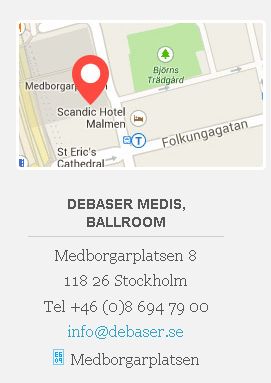
Come and join us at Debaser! (more details to come)

debaserlogdebaser

The video below explains the day.

http://www.youtube.com/watch?v=AnlF-Lp7sQY

See the video featuring Peace Ambassador Prem Rawat

And a final reminder.

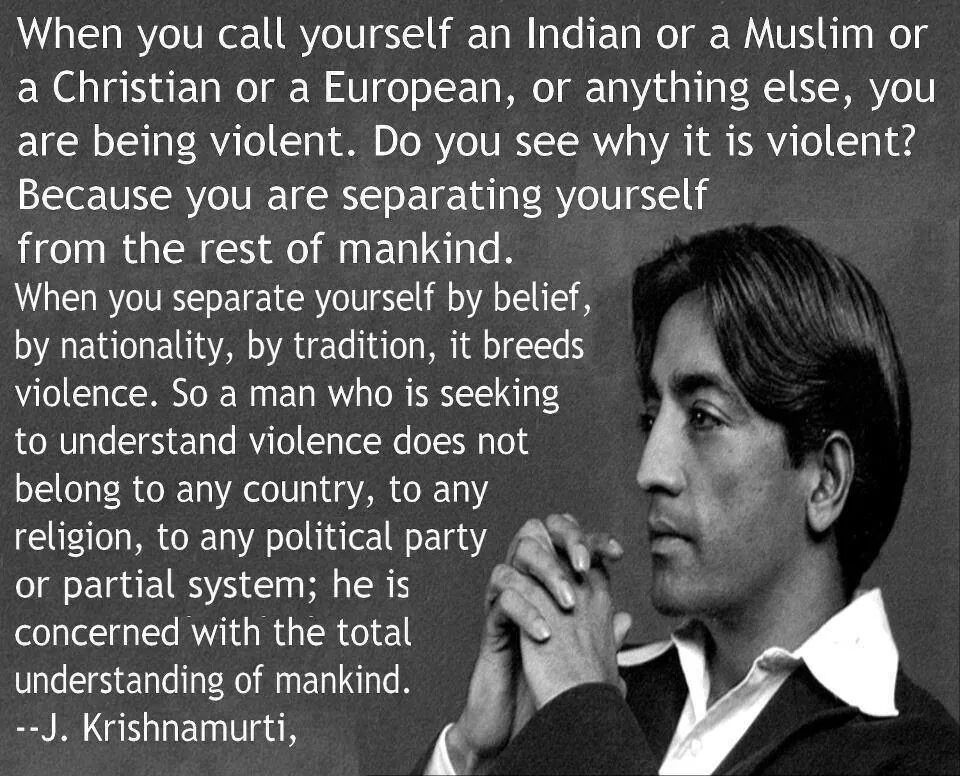
Peace is a feeling. It is inside you. Peace starts now. In this moment

KRishnamurit


MLKING

Workshop: Simulating how the market based instrument flexible fees works

Aligning economic policy to physical constraints and people’s needs

Length: 0.5-2 days
Purpose: to simulate how flexible fees stimulate the development of the circular economy. This will give you insights into how economy, ecology and sustainability  overlap and what can be done practically and on policy level in this age of constraints. Continue reading “Workshop: Simulating how the market based instrument flexible fees works”

Facilitating at the Sacred Valley Dialogues, 23-26 October

Scared valley

Sacred Valley Dialogues are conferences and workshops for business leaders who have decided to make their business both sustainable and resilient.

Guest lectures and dialogues are followed by in-depth workshops and exercises with opportunities for you to define your own strategy on how to navigate and lead in a changing business landscape. Come prepared for innovation and co-creation!

The first conference is scheduled for October 2014 with key-note speaker and co-creator Polly Higgins (Eradicating Ecocide, Earth is our Business). Other speakers and co-creators  include: Elisabet Sahtouris (EarthDance: Living Systems in Evolution, A Walk Through Time: From Stardust to Us), and Jem Bendell (Healing Capitalism (2014), Evolving Partnerships: A Guide to Working with Business for Greater Social Change (2011), The Corporate Responsibility Movement: Five Years of Global Corporate Responsibility Analysis from Lifeworth, 2001-2005 (2008) and Terms for Endearment: Business, NGO’s and Sustainable Development (2000).

READ MORE ON THE SACRED VALLEY SITE Sacredvalleydialogues.org

Newsletter AUGUST 2014 Vol. 2 Issue 7 The funnel, the game change and the dialogue.

Searching for ways to reflect on leadership challenges

HOW DO YOU EXPLAIN THE NEED TO ADAPT NOT JUST OUR CORPORATIONS, BUT OUR WAY OF SEEING THINGS? THIS IS THE LEADERSHIP CHALLENGE SIGNALS TAKES ON AS EUROPE TAKES ITS SUMMER VACATIONS.
Signals: Thinking about the way we think was once popular in strategic circles. No so much anymore. However, at least we question our assumptions more, thanks to the rise of great minds like Peter Senge http://executive.mit.edu/faculty/profile/30-peter-senge and Donella Meadows http://www.donellameadows.org/. We need to sit back and reflect. The signals we are seeing tell us that the collision course with nature we are all bound on will be the trainwreck of the century, and the solutions we need to look for are not on the level of changing light bulbs, but in the very way we perceive the world. We need to redefine what we mean by growth, how we see the economy and how we as strategists advise the organisations we work for. Continue reading “Newsletter AUGUST 2014 Vol. 2 Issue 7 The funnel, the game change and the dialogue.”